

Short overview: does sulfate-free shampoo help a flaky scalp?
A sulfate-free shampoo may suit a scalp that feels dry or tight after washing, but sulfate-free alone does not mean anti-dandruff. Choose the formula by the cause of flaking, its active ingredients and its directions.
- Dryness or sensitivity: assess the whole formula, including fragrance, and how your scalp responds.
- Visible scale and buildup: salicylic acid can help loosen flakes so they rinse away.
- Recurring dandruff: a dandruff shampoo with an appropriate active may be needed; a gentle cleanser can fit between treatment washes.
- The bottle pictured: PsoriAid Shampoo with 3% salicylic acid, peat mud and menthol, 250 ml.
Glossary: scalp-care terms explained
- Sulfate-free
- Made without sulfate cleansing agents, including sodium lauryl sulfate (SLS), sodium laureth sulfate (SLES) and sodium coco-sulfate. SLS/SLES-free is a narrower claim than sulfate-free. This describes the cleansing system, not a treatment result.
- Surfactant
- A cleansing ingredient that helps water lift and rinse away oil, dirt and product residue.
- Sebum
- The natural oil produced by the skin.
- Keratolytic
- An ingredient that helps soften and loosen surface scale. Salicylic acid is an example.
- Malassezia
- A yeast normally found on skin that can be involved in dandruff and seborrheic dermatitis.
- Seborrheic dermatitis
- A recurring inflammatory skin condition that can cause flaking, itching and redness, often in oily areas such as the scalp.
- Contact dermatitis
- Skin inflammation caused by irritation or an allergic reaction to something touching the skin.
- Contact time
- How long a shampoo stays on the scalp before rinsing, as specified on its label.
A few flakes show up on a dark shirt, the scalp feels tight after washing, and another shampoo seems to promise a quick fix. It's easy to respond by washing more often or switching products again, but the right choice depends on why the scalp is flaking in the first place.
A sulfate-free shampoo for flaky scalp may feel more comfortable for someone who finds certain cleansers drying or irritating. It isn't automatically a dandruff treatment, though. The useful distinction is between sulfate-free as a cleansing preference and an active shampoo chosen to address dandruff or another scalp condition.
What Makes a Flaky Scalp So Hard to Live With
Flakes can be more than a minor appearance concern. They may land on clothing, return soon after washing, or come with tightness and discomfort that makes a routine feel like a cycle: wash, feel dry, then wonder whether washing again will help. Hair can also look dull or feel rough even when the scalp has just been cleaned.
Dandruff is common, not a niche cosmetic issue. A peer-reviewed clinical review estimates that it affects approximately 50% of adults worldwide, while seborrheic dermatitis affects roughly 1–3% of the general adult population. Those conditions are related, but they aren't interchangeable: ordinary dandruff is often mainly a scaling concern, whereas seborrheic dermatitis also involves inflammation. The clinical review on dandruff and seborrheic dermatitis notes that prevalence varies across age and population groups.
That distinction matters when choosing a shampoo. If the scalp is dry or easily irritated, changing the cleanser may improve how washing feels. If flakes are part of an inflammatory or recurring condition, a mild cleanser alone may not address the cause. A label that says “sulfate-free” describes part of the formula, not what the formula can treat.
The goal isn't to find a miracle bottle. It's to identify what the scalp may need, use a shampoo according to its purpose and directions, and seek medical guidance when symptoms are persistent or concerning. Understanding how cleansers work is a practical first step.
How Sulfates Actually Work on the Scalp
Sulfates such as sodium lauryl sulfate (SLS) and sodium laureth sulfate (SLES) are surfactants. A surfactant has one part that interacts with water and another that interacts with oil. That structure helps shampoo lift sebum, dirt, and styling residue so they can be rinsed away.
The generous lather many people associate with a thorough wash often comes from the cleanser system. Foam can make shampoo feel satisfying, but it isn't a measure of how well a product addresses flakes. A useful comparison is dishwashing: a cleanser designed to cut through grease can be effective, but repeated use may feel drying on some hands. That doesn't make the cleanser harmful. It means the formula and a person's skin can affect comfort.
Some people find that a sulfate-containing shampoo leaves their scalp feeling tight or dry after washing. A sulfate-free formula uses a different cleansing system and may suit someone who prefers a milder-feeling wash. But “sulfate-free” doesn't guarantee that every ingredient will agree with every scalp, or that the shampoo will address dandruff.
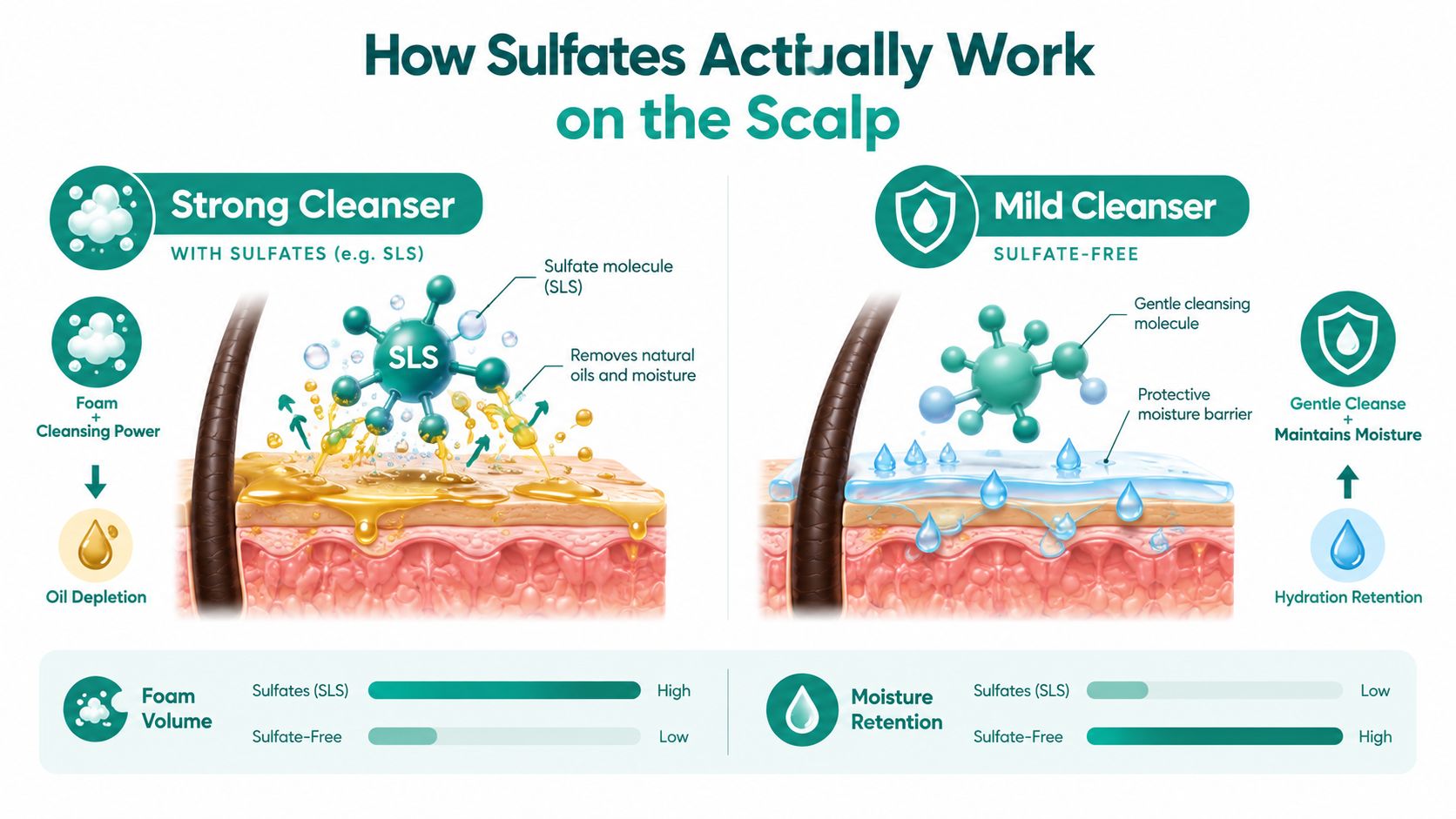
The distinction is especially important when flakes keep returning. The American Academy of Dermatology lists salicylic acid, sulfur, selenium sulfide, ketoconazole, coal tar, and zinc pyrithione among recognized dandruff-shampoo options. Its guidance on dandruff shampoos shows why the active ingredient and how the shampoo is used matter, not just the surfactant base.
Practical rule: Choose a cleansing system for comfort, but assess flake-control claims by the active ingredient and product directions.
How to Read a Sulfate-Free Label
“Sulfate-free” can be a helpful starting point, but the rest of the ingredient list still matters. Look for common sulfate names such as sodium lauryl sulfate, sodium laureth sulfate, and ammonium laureth sulfate. Formulas without those ingredients may use other surfactants, including coco-glucoside, decyl glucoside, or sodium cocoyl isethionate. These names don't guarantee a particular result; they identify other parts of the cleansing system.
Example from our shampoo labels: PsoriAid Shampoo with salicylic acid and PsoriAid Shampoo with tea tree oil and peat list Coco-Glucoside as a cleansing surfactant. Their published ingredient lists also include Sodium Coco-Sulfate, which is a sulfate surfactant. A formula can therefore be free from SLS and SLES without being sulfate-free. Check the current ingredient list on your bottle; ingredient origin alone does not establish how gentle a finished formula will feel.
A flaky or sensitive-feeling scalp may also benefit from checking for potential irritants and supportive ingredients. If fragrance tends to bother the scalp, a fragrance-free formula may be worth considering. Ingredients such as glycerin, panthenol, aloe, or oat extract may appear in products intended to moisturize or comfort the skin, but their presence doesn't establish that a shampoo treats dandruff or a medical condition.
A short label-reading routine can make comparisons clearer:
- Check the cleanser list: See whether the formula contains the sulfate ingredients that the shopper wants to avoid.
- Identify what replaces them: Look for other surfactants and consider how the finished product feels after use.
- Scan for fragrance and supportive ingredients: These may matter for personal comfort, but don't prove treatment efficacy.
- Look for a recognized anti-dandruff active: Match the product's intended use and directions to the problem it claims to address.

Product claims also depend on intended use. The FDA's explanation of cosmetics under U.S. law says an anti-dandruff shampoo can be both a cosmetic and a drug: it's a cosmetic when intended to cleanse hair, and a drug when intended to treat dandruff. That's why ingredient identity, concentration, labeling, and directions matter when a product makes treatment claims.
Why Your Scalp Is Flaking in the First Place
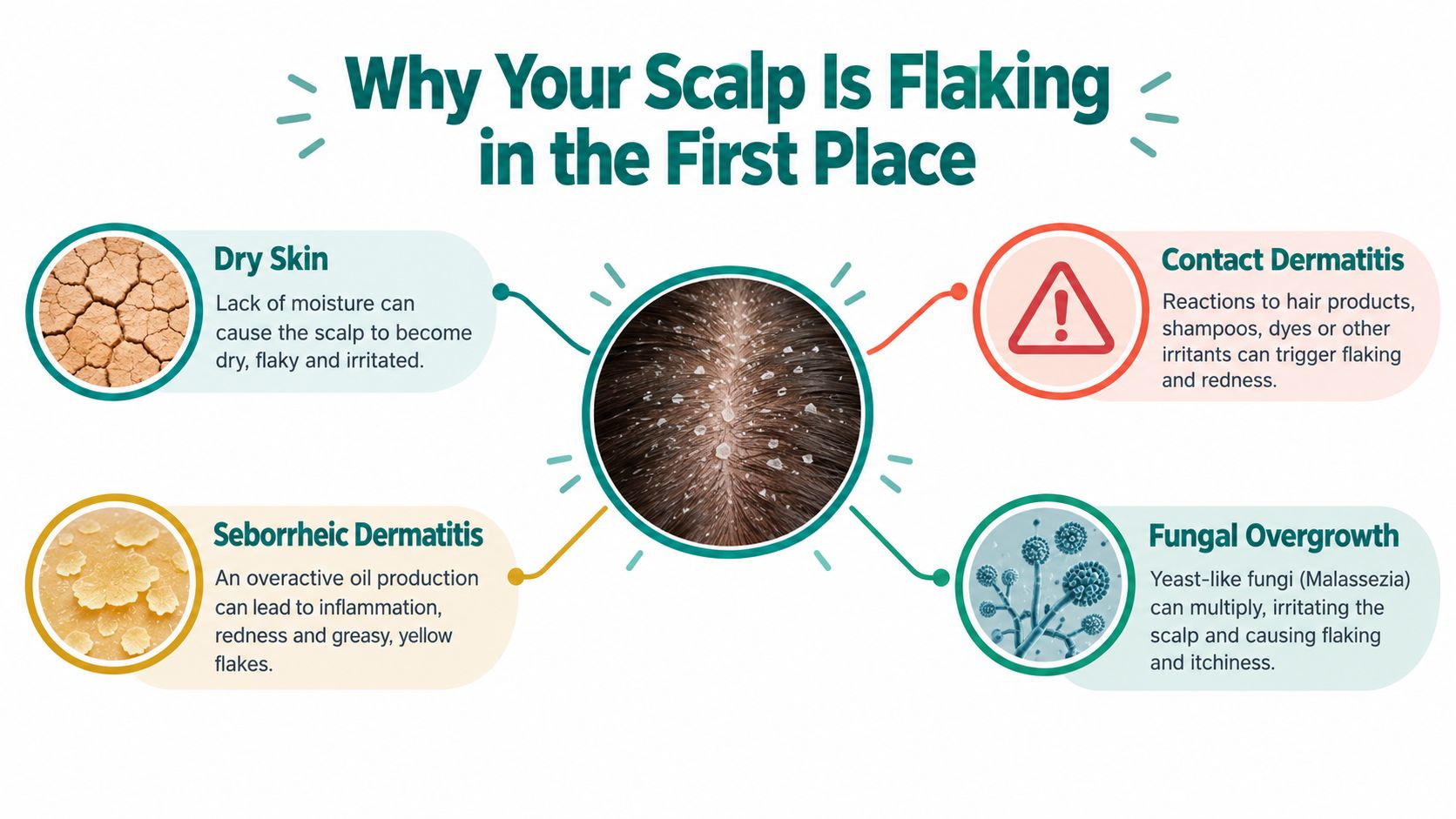
A shampoo can't be matched well to a scalp problem until the likely cause is considered. Dry skin may produce fine, dry-looking flakes and a tight feeling, especially after washing. Contact irritation can follow exposure to a product that doesn't agree with the skin, and may come with discomfort or visible irritation. These clues aren't a diagnosis, but they can help explain why changing a cleanser may affect comfort.
Dandruff and seborrheic dermatitis can involve recurring flakes and itching; greasy or yellowish scale may occur, though appearances vary. Seborrheic dermatitis includes inflammation, so a gentler cleanser may help with tolerability but shouldn't be confused with condition-specific care. Thick, sharply defined plaques can have other causes, including psoriasis, and may need assessment rather than repeated shampoo experiments.
For seborrheic dermatitis, clinical guidance describes antifungal shampoos containing ingredients such as ketoconazole, zinc pyrithione, or selenium sulfide. The Grampian formulary guidance gives a typical scalp contact period of 5–10 minutes for these products. The exact instructions can differ by product, so the label or clinician's advice should take precedence.
Hair texture can also affect how a routine feels. Keep cleansing focused on the scalp and condition dry lengths as needed. For additional context on recurring flakes and discomfort, see our guide to dandruff and an itchy scalp.
Persistent or severe itching, pain, oozing, rapidly worsening patches, or symptoms that don't improve deserve medical attention. A healthcare professional can help distinguish among causes that may look similar at home.
Ingredients That Help and Ones to Treat With Caution
A flaky-scalp formula can be designed for different purposes. Some ingredients focus on loosening visible scale, while others are used as anti-dandruff actives. Supportive cosmetic ingredients may contribute to how a shampoo feels, but shouldn't be treated as substitutes for active treatments.
Salicylic acid is a keratolytic, meaning it can help soften and loosen scale. Clinical guidance discusses it as a scale-softening ingredient, and documented over-the-counter anti-dandruff shampoos include examples at 2% and 3%, depending on the specific product and labeled use. The NHS guidance on seborrhoeic dermatitis supports that limited description; it doesn't mean every salicylic-acid shampoo has the same purpose or effect. For a closer look at this ingredient category, see shampoo with salicylic acid.
Ketoconazole, zinc pyrithione, and selenium sulfide are recognized anti-dandruff options. They're treatment ingredients, not merely gentler cleansers. The right choice and directions depend on the product, symptoms, and, where appropriate, clinical advice.
| Flaky Scalp Ingredients at a Glance | Primary role | Evidence or label context |
|---|---|---|
| Salicylic acid | Helps loosen visible scale | Specific OTC shampoo labels include different concentrations and uses |
| Ketoconazole | Anti-dandruff active | Used in medicated shampoos; follow product directions |
| Zinc pyrithione | Anti-dandruff active | Listed among recognized dandruff-shampoo options |
| Selenium sulfide | Anti-dandruff active | Used in medicated shampoos; follow product directions |
| Tea tree oil | Cosmetic or sensory ingredient | Mayo Clinic says strong evidence for dandruff benefit is lacking |
| Peat | Cosmetic ingredient and natural source of humic substances | Don't infer disease-treatment effects from the ingredient alone |
Tea tree oil needs particular care in how it's described. Mayo Clinic's dandruff treatment guidance says there's no strong evidence that tea tree oil helps with dandruff and notes that it may cause allergic reactions in some people. Its presence in a shampoo doesn't prove that the finished formula treats flakes or a scalp condition.
Peat is a distinctive cosmetic ingredient and a natural source of humic substances. Its inclusion doesn't establish therapeutic effects, and “natural” doesn't automatically mean gentler or more effective.
For a scale-focused option, PsoriAid Shampoo with salicylic acid, peat and menthol is the product pictured in this article. The supplied 250 ml bottle is labelled 3% salicylic acid. Salicylic acid helps loosen visible scale; the cooling sensation from menthol is not proof that the cause of flaking has been treated. Follow the directions on your bottle for contact time and frequency, as formulas and labels can vary by market.
Building a Routine That Actually Works
A useful routine can include both a treatment shampoo and a milder cleanser. They have different jobs: a medicated shampoo targets dandruff with its active ingredient, while a sulfate-free shampoo may be chosen for a more comfortable wash on other days. The appropriate schedule depends on diagnosis, product directions, symptom severity, and clinician advice.
When a treatment shampoo is recommended, apply it to the scalp, not just the hair lengths. Some clinical guidance describes a two-stage wash: the first pass lifts sebum and debris, and the second allows better contact with the active ingredient. Follow the product label for contact time. Don't leave a product on longer in the hope that extra time automatically means greater benefit.
A study offers an example of intermittent use, not a universal schedule. In a randomized study, a treatment shampoo was used three times weekly for two weeks, followed by once-weekly treatment alternating with a neutral shampoo during an eight-week maintenance period. The study linked improvement with reduced Malassezia levels and greater microbial richness. The published study abstract describes that regimen; it doesn't establish a schedule that suits every person or product.
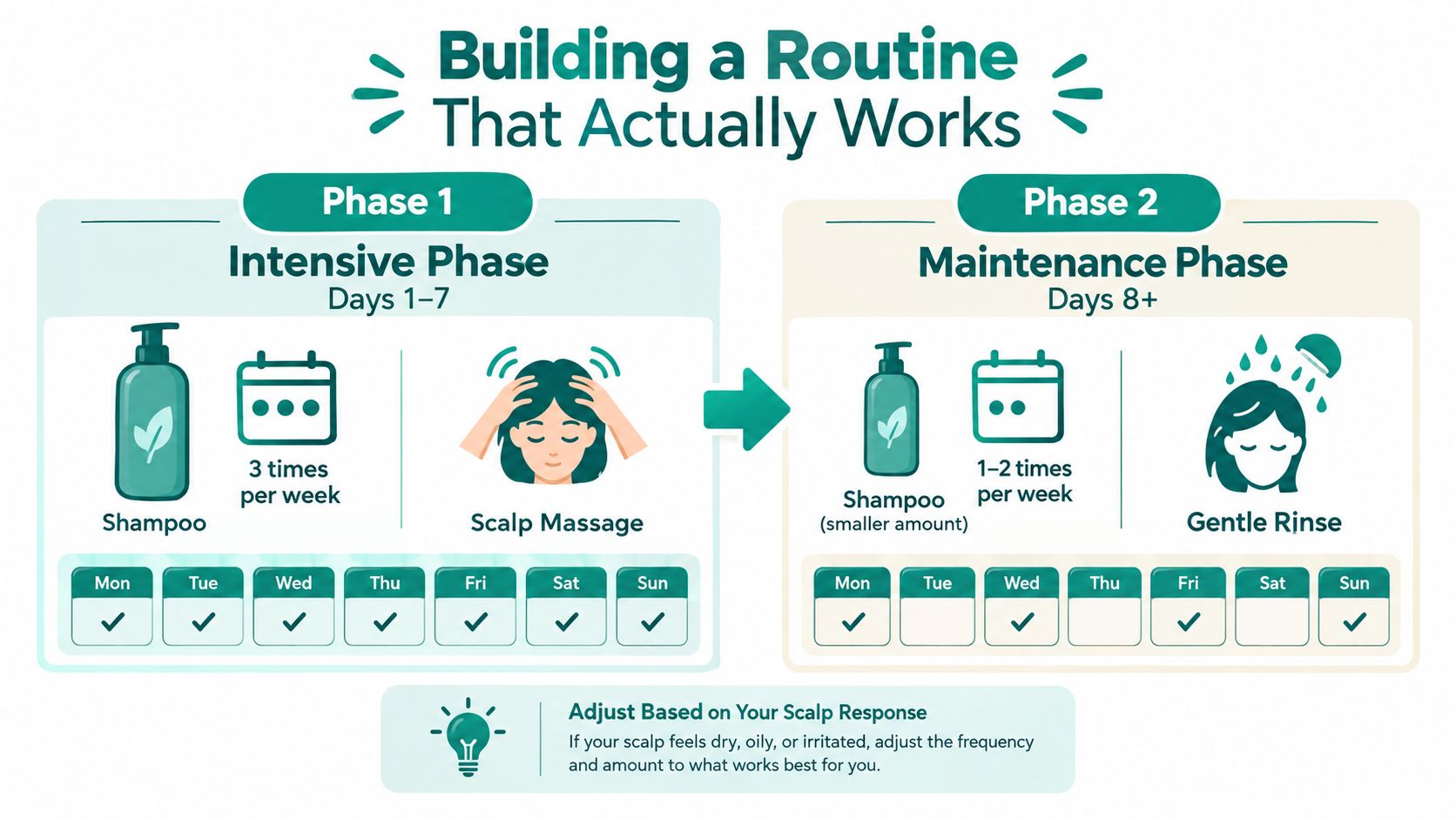
A practical approach is to use the treatment product as directed during symptom control, then discuss intermittent maintenance with a clinician if symptoms settle. A gentle cleanser can fit on other wash days, particularly when hair is dry, curly, color-treated, or prone to feeling rough. If a cosmetic shampoo alone isn't helping persistent flakes, increasing wash frequency may not address the cause.
Introduce a new product carefully and pay attention to comfort, visible changes, and any irritation. If symptoms worsen or remain persistent, seek professional advice rather than cycling through more shampoos without guidance.
Where a Gentle Peat-Based Shampoo Can Fit
A sulfate-free shampoo can fit into a routine as a cleansing choice, particularly for someone whose scalp feels dry or sensitive after washing. It may help cleanse away visible flakes and buildup while leaving the scalp feeling more comfortable. That role is different from treating dandruff or seborrheic dermatitis, which may call for a recognized active ingredient and product-specific directions.
For frequent cleansing, PsoriAid Shampoo with tea tree oil and peat is a separate formula from the salicylic-acid shampoo pictured above. Its product page describes a gentle daily cleanser. Choose between the formulas by checking the current ingredient list, your scalp needs and the directions on the bottle; do not assume that all PsoriAid shampoos have the same ingredients or purpose.
Tea tree oil also shouldn't be treated as proof of anti-dandruff efficacy. As noted by Mayo Clinic, evidence that tea tree oil helps dandruff is not strong, and allergic reactions are possible. Anyone who develops irritation should stop using the product and consider seeking advice, especially if symptoms are persistent or worsening.
Peat may interest ingredient-conscious shoppers as a distinctive cosmetic ingredient and a natural source of humic substances. Readers curious about its role in personal care can explore facts about peat in skincare, while keeping ingredient background separate from claims about a finished product.
Conventional anti-dandruff shampoos remain an option when flakes recur or symptoms suggest a condition that needs active care. A sulfate-free cleanser and a medicated shampoo don't have to compete: one may suit wash-day comfort, while the other serves a specific treatment role. Severe, painful, infected-looking, rapidly worsening, or persistent symptoms call for medical guidance.
If the scalp feels tight after washing, a milder cleanser may be worth trying; if flakes keep returning, check the cause and match the active ingredient and directions to the problem. Choose a routine for what the scalp needs, and contact a healthcare professional when symptoms are persistent or concerning.
Frequently asked questions
Is sulfate-free shampoo good for a flaky scalp?
It may be a comfortable cleansing choice if certain shampoos leave your scalp feeling dry or tight. Recurring dandruff may still need an appropriate active ingredient. Sulfate-free is not a guarantee of gentleness or flake control.
Can sulfate-free shampoo treat dandruff on its own?
The sulfate-free claim alone does not establish a dandruff treatment. A sulfate-free formula can also contain a dandruff active, so check the ingredient list, intended use and directions rather than relying on the front label.
What does salicylic acid do for scalp flakes?
Salicylic acid helps soften and loosen surface scale so it can wash away more easily. It does not address every cause of flaking and is not interchangeable with an antifungal ingredient.
Which Sphagnum Botanicals shampoo is pictured here?
The main image shows the 250 ml PsoriAid Shampoo bottle labelled with 3% salicylic acid, peat mud and menthol. It is different from the PsoriAid tea tree oil and peat shampoo discussed as a frequent-cleansing option.
How often should I wash, and how long should I leave shampoo on?
Follow the directions on your specific bottle and any advice from your clinician. Frequency and contact time depend on the formula, hair texture and scalp tolerance; there is no single schedule for all sulfate-free or dandruff shampoos.
Can I alternate a gentle cleanser with a dandruff shampoo?
Yes, a gentle cleanser may fit between treatment washes when extra washing is needed. Keep the treatment schedule consistent with its label or your clinician's advice, and condition dry hair lengths as needed.
When should I seek advice about a flaky scalp?
Seek professional advice for persistent or worsening flakes, marked redness, pain, sores, oozing, bleeding or patchy hair loss. Dryness, dandruff, psoriasis and contact irritation can look similar and may need different care.
Sources and further reading
- American Academy of Dermatology: how to treat dandruff — active ingredients and label-specific use.
- Mayo Clinic: dandruff diagnosis and treatment — shampoo options and sensitivity considerations.
- Our guide to shampoo with salicylic acid.
- Our guide to dandruff and an itchy scalp.