

You wash your face with a bar marketed for acne, hoping the squeaky-clean feeling means your pores are finally clear. Instead, your cheeks feel tight, your nose still has blackheads, and a few days later the skin looks red and bumpy. The problem may not be that bar soap is automatically bad for acne. It may be that the formula, active ingredient, pH, or frequency doesn't match your skin.
The best bar soap for acne is therefore not one universal winner. A salicylic acid bar may suit blackheads and whiteheads, while a gentle syndet bar may be the wiser choice for sensitive, irritated skin. Body acne can also need a different approach from facial acne. This guide will help you compare those choices calmly, read labels more intelligently, and build a routine that cleans without stripping your barrier.
Table of Contents
- Introduction Why Bar Soap Can Help or Hurt Acne Prone Skin
- How Acne Prone Skin Reacts to Bar Soap
- Active Ingredients That Matter in Acne Bar Soaps
- Detailed Comparison of Bar Soap Types for Acne Prone Skin
- How to Use Bar Soap Without Over Stripping Your Skin
- Choosing the Right Bar Soap for Your Skin Scenario
- Final Recommendations and When to Consider Alternatives
Introduction Why Bar Soap Can Help or Hurt Acne Prone Skin
Bar soap appeals to people who want a simple routine. One product can fit beside the sink, travel easily, and wash the face, chest, shoulders, or back without the clutter of several bottles. For body breakouts, that convenience can make consistent cleansing easier. Acne affects about 20.5% of the global population over age 16, so the demand for practical acne care is broad and recurring worldwide, as reported in the adult acne treatment guide.
The frustration begins when “clean” gets confused with “cured.” A strongly cleansing bar may remove surface oil, but it can't address every process involved in acne. A bar that's too alkaline or drying can also leave skin uncomfortable, which makes regular use harder. Some people respond by washing more often or scrubbing harder, creating a cycle of irritation rather than a calmer complexion.
Consider two common situations. Someone with an oily forehead and persistent blackheads may benefit from a short-contact salicylic acid cleanser. Someone with adult acne, redness, and a damaged barrier may need a mild syndet bar first, even if it doesn't feel as powerful. The right decision depends on acne pattern, skin location, pH, and tolerance, not on the word “acne” printed on the package.
A useful evaluation asks four questions:
- What kind of acne is present? Clogged pores call for a different active strategy from red, inflamed pimples.
- Is the bar true soap or syndet? Conventional soap is usually alkaline, while syndet formulas are designed closer to skin-friendly pH.
- How reactive is the skin? Fragrance, aggressive cleansing, and repeated use may worsen tightness or stinging.
- Can the routine be followed consistently? A milder product used comfortably is often more practical than a stronger one that causes peeling.
By the end, you'll be able to choose a starting point for facial acne, body acne, oily skin, or sensitive skin, and recognize when a bar isn't the right tool.
How Acne Prone Skin Reacts to Bar Soap
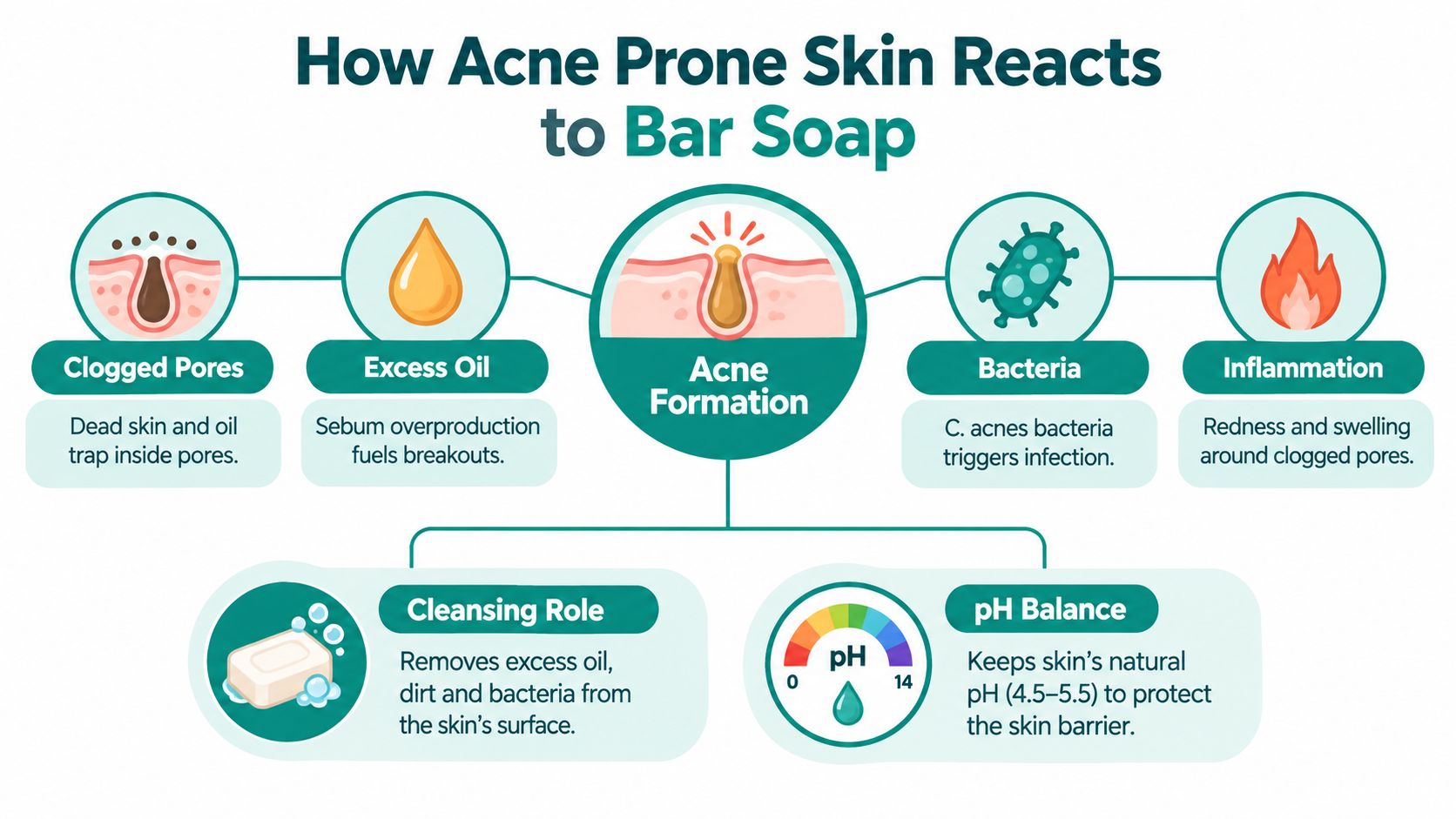
Acne begins below the surface of a simple wash. Dead skin cells and oil can collect inside a pore, excess sebum can make congestion more likely, and bacteria and inflammation can turn a blocked pore into a red lesion. Cleansing removes sweat, sunscreen, makeup, and surface oil, but it isn't a complete acne treatment by itself.
Why pH changes the experience
True soap is commonly alkaline, around pH 9 to 10, whereas syndet bars are generally formulated closer to pH 5.5 to 7, according to a dermatology educational review from CeraVe's pH speaker deck. That difference helps explain why a traditional soap bar can leave skin feeling tight, rough, or squeaky. The sensation doesn't prove that the bar has cleaned acne effectively. It may indicate that the skin's surface oils have been removed aggressively.
Syndet means synthetic detergent. That label doesn't automatically make a product perfect, but syndet bars can be less irritating than true soap for people who cleanse frequently. Randomized acne studies summarized in the same review found less cutaneous irritation with syndet bars than with true soap, alongside some reduction in acne lesions.
What to inspect on the label
Look beyond “natural,” “deep cleansing,” and “acne-fighting.” Check whether the product identifies an active ingredient, whether it contains fragrance, and whether the cleansing base leaves your skin comfortable after rinsing. A non-comedogenic claim can be useful, but it isn't a guarantee that every person will tolerate the formula.
Moisturizing ingredients can make a bar more comfortable, especially on the body or on dry skin. However, a moisturizing bar isn't a replacement for an acne active when clogged pores or inflammation are the main concern. Likewise, a mineral or mud product may provide a deep-feeling cleanse without functioning as a medical acne treatment. For example, Nordic Peat Mask, 100% Pure Balneological Peat Mud, Professional Grade is described as 100% pure balneological peat mud for deep cleansing and skin renewal on the face, scalp, and body. It shouldn't be treated as interchangeable with a salicylic acid or benzoyl peroxide acne wash.
Practical rule: If your face feels burning, tight, or persistently rough after cleansing, the bar is asking too much of your skin, even if it temporarily reduces surface oil.
Active Ingredients That Matter in Acne Bar Soaps
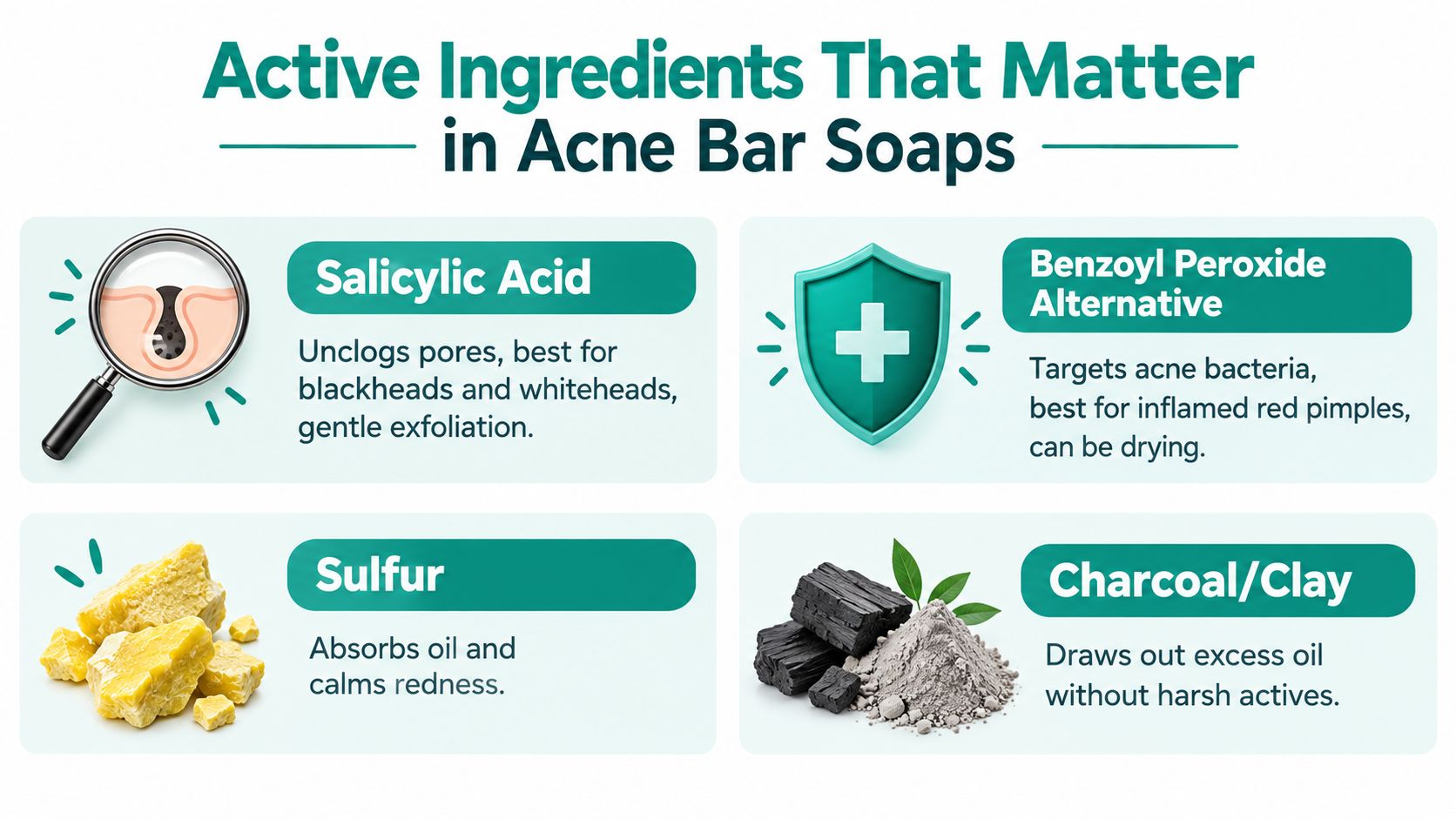
The active ingredient should match the breakout pattern. Salicylic acid is primarily useful for comedonal acne, meaning blackheads, whiteheads, and clogged pores. Benzoyl peroxide is more closely associated with red, inflamed pimples because it targets acne-related bacteria and can be more drying.
For blackheads and whiteheads, start by considering salicylic acid. For red, inflamed pimples, benzoyl peroxide may be the more relevant active, provided your skin tolerates it.
The 2024 American Academy of Dermatology acne guideline gives topical salicylic acid a conditional recommendation, alongside azelaic acid and clascoterone, while strongly recommending fixed-dose combinations involving benzoyl peroxide with topical retinoids or antibiotics. That distinction places salicylic acid within evidence-based acne discussions without suggesting that a cleanser alone will solve every type of acne. The guideline information is summarized in the American Academy of Dermatology acne guideline coverage.
Salicylic acid for pore congestion
Salicylic acid is oil-soluble, which makes it a logical ingredient for pores containing oil and dead skin. Dermatology guidance commonly places salicylic acid cleansers in the 0.5% to 2% range, and acne bar soaps often use a short-contact format to balance pore-clearing action with irritation control. A controlled crossover study of 30 acne vulgaris patients compared a 2% salicylic acid cleanser with a 10% benzoyl peroxide wash. Only the salicylic acid cleanser produced a significant reduction in comedones, and the salicylic acid sequence improved after participants switched from benzoyl peroxide, as documented in the PubMed trial record.
That result doesn't make every salicylic acid bar superior. It does make salicylic acid a sensible first consideration when blackheads and whiteheads dominate.
Benzoyl peroxide and other options
Benzoyl peroxide washes are commonly placed around 2.5% to 5%, while stronger wash formats have also been studied. Benzoyl peroxide has an important historical role because it doesn't drive bacterial resistance in the way antibiotics can, and dermatology literature describes it as a rational first-line and maintenance option. It may suit inflamed acne better, but dryness, peeling, and irritation can limit use.
Sulfur can absorb oil and calm the feel of irritated skin, although the scent and drying effect may not suit everyone. Charcoal or clay bars can lift surface oil, but marketing language about “drawing out toxins” isn't a substitute for an identified acne active. Tea tree oil is another popular option, yet essential oils can irritate reactive skin. If you're considering it, review ingredient-specific information such as tea tree oil benefits in skincare and patch-test rather than assuming “natural” means non-irritating.
Detailed Comparison of Bar Soap Types for Acne Prone Skin
A bar's shape doesn't tell you how it will behave. The cleansing base, active ingredient, pH, and intended body area matter more than whether the product is sold as a bar, cleanser, or wash. The table below separates the main options without pretending that one formula works for every face and body.
| Bar Soap Type | Typical Active and pH | Best For | Watch Out For |
|---|---|---|---|
| Salicylic acid bar | Salicylic acid commonly 0.5% to 2% in cleansers, pH depends on formula | Blackheads, whiteheads, clogged pores, oily body areas | Dryness, stinging, overuse, and irritation on a damaged barrier |
| Benzoyl peroxide wash in bar-style use | Benzoyl peroxide commonly 2.5% to 5% in washes, pH depends on formula | Red, inflamed pimples and acne-prone body areas | Peeling, dryness, irritation, and reduced tolerance with frequent use |
| Syndet gentle bar | Usually closer to skin-friendly pH 5.5 to 7 | Sensitive facial skin, redness, barrier-impaired skin | May not be sufficient alone for persistent inflammatory acne |
| Sulfur or charcoal bar | Sulfur, charcoal, or clay, with pH depending on formula | Oily-feeling skin and people wanting a simple cleansing bar | Fragrance, dryness, uncertain active strength, and irritation |
| Moisturizing non-medicated bar | Humectants, emollients, or barrier-supportive ingredients, with pH depending on formula | Dry skin, irritation-prone skin, or alternating with an active | Won't directly target clogged pores or inflamed acne as an acne active would |
Salicylic acid bars
A salicylic acid bar is the clearest match for comedonal acne. Its short contact with the skin can make it easier to introduce than a leave-on exfoliant, but it still deserves careful use. If your nose, forehead, chest, or back has rough congestion without much redness, this category has a logical fit.
Benzoyl peroxide formats
Benzoyl peroxide is a better conceptual match for inflammatory lesions, but the wash-off format doesn't eliminate irritation. Use it cautiously on areas that can tolerate it, and remember that a formula's strength and contact time affect the experience. A stronger product isn't automatically a better product if you stop using it because your skin becomes uncomfortable.
Syndet and moisturizing bars
Syndet bars are often the safer starting point when the face is sensitive, stinging, or visibly dry. A moisturizing non-medicated bar can also be useful on dry body skin or on days when you aren't using an acne active. These products support cleansing and comfort, but they don't replace targeted treatment for persistent acne.
Sulfur, charcoal, and clay
These bars appeal to people who want an earthy, purifying wash. They may remove surface oil effectively, yet the formula still needs to be judged by how the skin feels afterward. Avoid treating a tight finish as evidence that the bar is working harder.
How to Use Bar Soap Without Over Stripping Your Skin
Many acne routines fail because the bar is used like a scrub. You don't need to press the bar directly into facial skin, create a thick abrasive lather, or keep washing until the skin feels completely oil-free. The aim is brief, gentle cleansing that removes buildup while leaving the barrier comfortable.
A low-irritation washing method
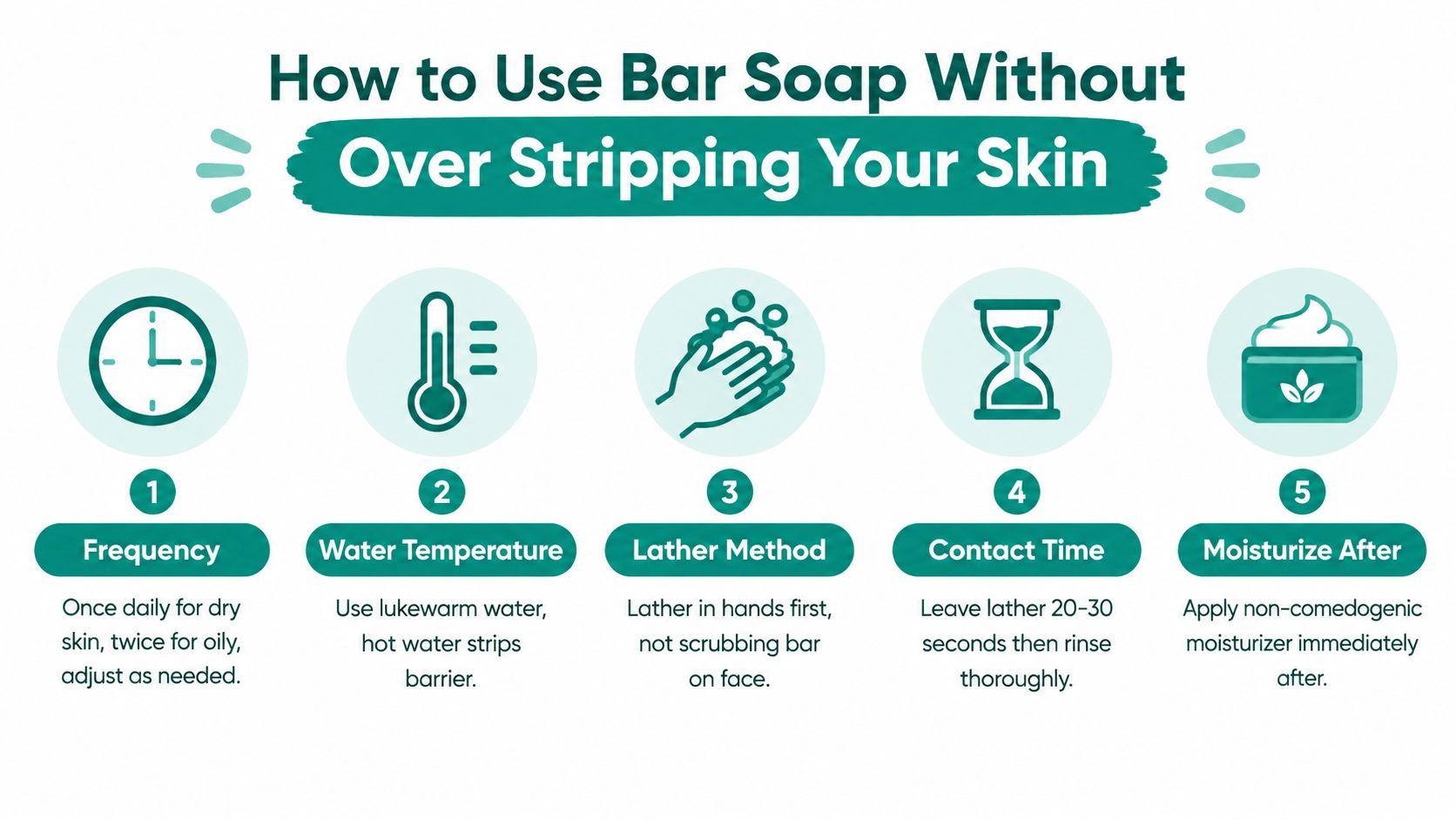
Start with lukewarm water. Wet the skin, work the bar between your hands, and apply the lather with your fingertips. Keep pressure light, especially over active lesions, because friction can make already inflamed skin feel worse.
Leave the lather on only briefly, then rinse thoroughly. Dermatology guidance commonly discusses once-daily or twice-daily cleansing depending on tolerance, so let your skin decide where you start. Dry or sensitive skin may prefer once-daily use, while an oily body area may tolerate more frequent cleansing.
Follow with a non-comedogenic moisturizer while the skin is still slightly damp. Moisturizing doesn't cancel the acne routine. It helps reduce the discomfort that can make people abandon treatment or compensate with harsher washing. For broader advice on keeping reactive skin comfortable, consult these gentle acne solutions.
Introducing an active bar
Patch-test a new bar on a small area before using it across the face or back. Begin with a limited routine rather than adding multiple acne products at once. If the skin remains calm, you can adjust gradually. If you notice burning, persistent redness, cracking, or unusual peeling, pause the active and return to a gentle cleanser and moisturizer.
Avoid combining several potentially irritating products during the same wash. A salicylic acid bar plus a rough scrub, strong leave-on exfoliant, or heavily fragranced product can make it difficult to identify the trigger. Guidance on products to avoid for dry skin can help you simplify a routine when your barrier already feels compromised.
Skin check: Clean skin should feel fresh and flexible, not hot, tight, squeaky, or painful.
Store the bar where water can drain between uses. A constantly wet bar becomes messy and can be harder to dose gently, while a dry bar makes controlled lathering easier.
Choosing the Right Bar Soap for Your Skin Scenario
The most useful choice depends on the situation in front of you, not on a universal ranking. Acne-prone skin can be oily in one area and dry in another. The face may sting while the back tolerates a more active wash. A routine that respects those differences is more likely to be followed.
| Skin scenario | Starting point | How to adjust |
|---|---|---|
| Oily skin with blackheads and whiteheads | Salicylic acid bar | Reduce use if tightness or peeling develops |
| Sensitive adult skin with redness | Gentle syndet bar | Add targeted treatment only after comfort improves |
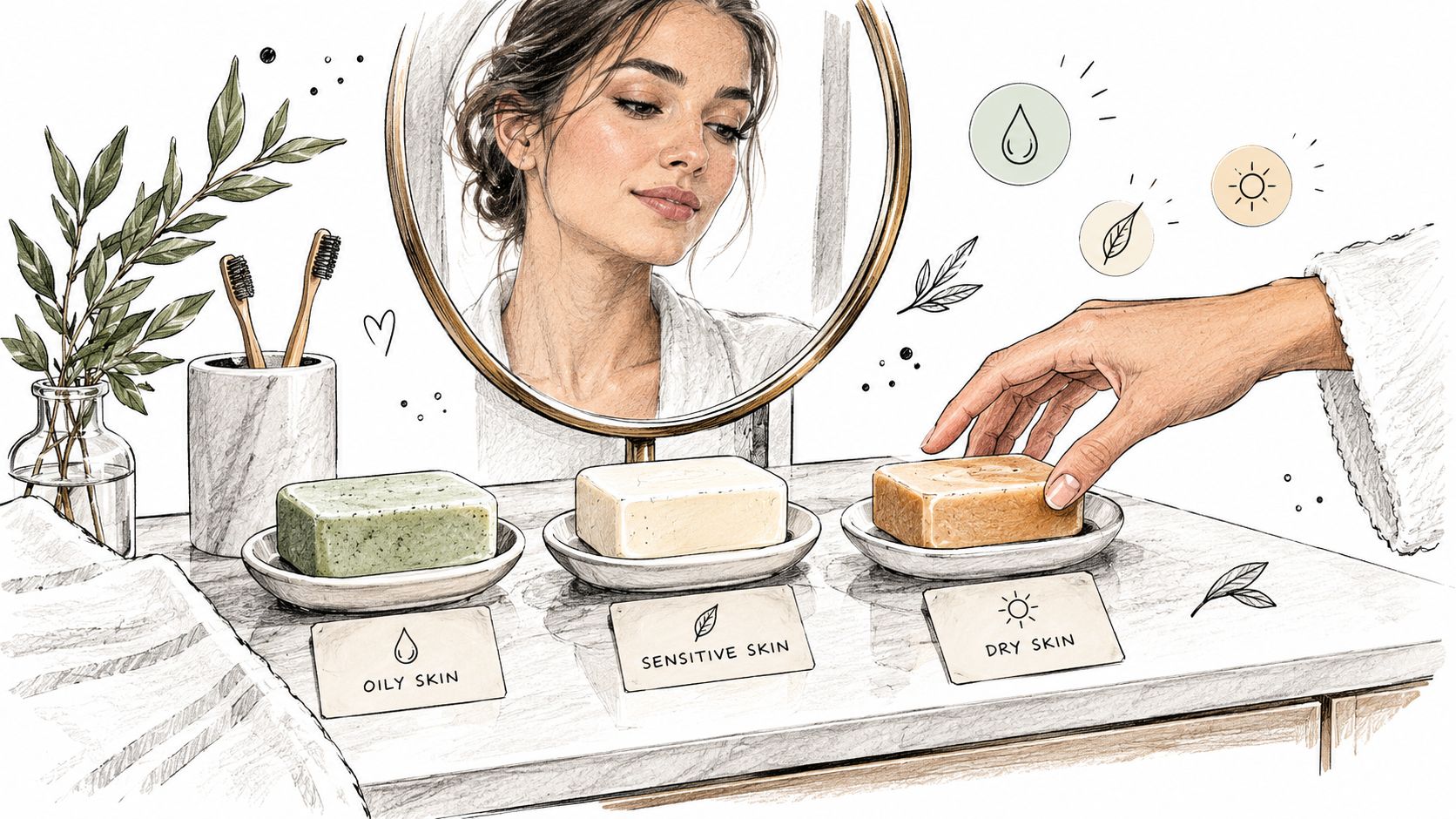
| Dry or barrier-impaired skin | Mild moisturizing bar | Avoid strong actives until stinging settles |
| Back, chest, or shoulder breakouts | Salicylic acid or benzoyl peroxide wash-style bar, depending on lesion type | Use carefully and moisturize dry areas |
| Combination face and body acne | Separate products by area | Use the gentler facial option and a more targeted body routine |
Oily skin with comedones
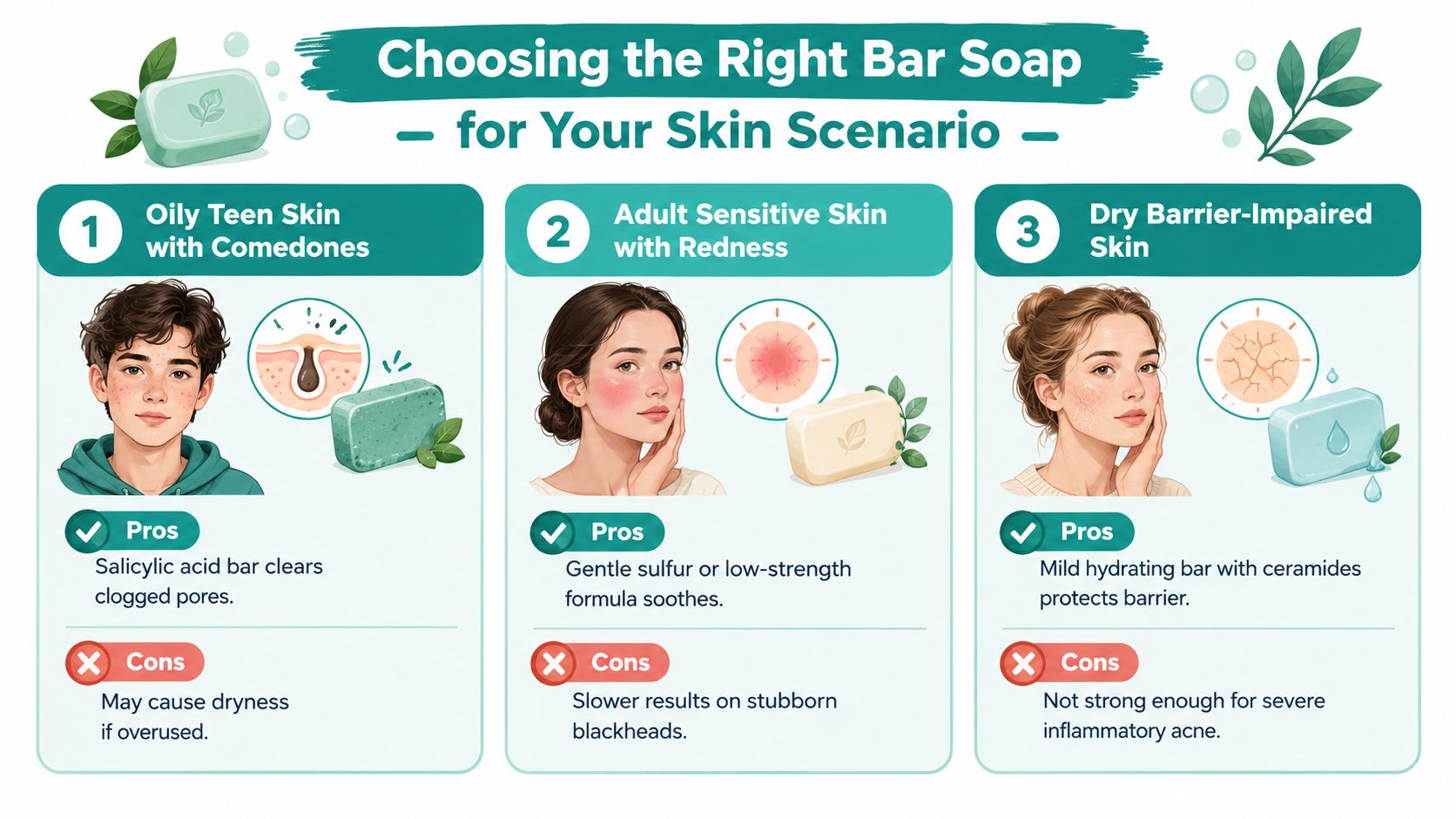
If your main concern is congestion, a salicylic acid bar can be a reasonable starting point. Use a light lather and watch the skin over time. The goal is fewer clogged pores without creating a dry surface that feels increasingly reactive.
Sensitive or redness-prone skin
Start with a syndet bar rather than chasing the strongest active. A mild sulfur formula may suit some people, but fragrance and essential oils can still cause problems. If your skin burns with water or moisturizer, focus on barrier comfort before adding exfoliation.
Dry, barrier-impaired skin
A moisturizing non-medicated bar is often more sensible than an acne-labeled product that leaves the skin tight. It won't treat severe inflammatory acne directly, but it can provide a stable cleansing base while you seek more appropriate treatment. Current acne cleanser evidence remains limited and context-dependent, so tolerability deserves serious weight. A gentle low-waste soap for clear skin may be relevant for readers prioritizing a mild, non-comedogenic cleansing approach, but the formula still needs to suit the individual.
Body and combination acne
Back and chest skin often handles cleansing differently from facial skin, especially when sweat, clothing, or exercise contribute to buildup. Choose the active according to the lesion pattern, then keep contact brief and moisturize areas that become dry. If your face is sensitive but your back has persistent breakouts, there's no rule that both areas need the same bar.
Ingredient lists can also help you avoid unnecessary irritants. For a broader review of harmful ingredients in hygiene and beauty products, focus on the ingredients your own skin consistently reacts to rather than assuming every flagged ingredient affects everyone equally.
Final Recommendations and When to Consider Alternatives
For blackheads, whiteheads, and clogged pores, try a salicylic acid bar or cleanser in a short-contact routine. Salicylic acid remains conditionally recommended in the 2024 AAD acne guideline, and the controlled comparison discussed earlier found stronger comedone performance from a 2% salicylic acid cleanser than from a 10% benzoyl peroxide wash in that study.
For red, inflamed pimples, a benzoyl peroxide wash-style product may be more relevant, but irritation can limit its usefulness. For sensitive, dry, or barrier-impaired skin, choose a syndet or moisturizing non-medicated bar first. For body acne, match the active to the lesion type and use a separate, gentler facial product when needed.
Give a routine time to show whether your skin accepts it. Acne care isn't judged by the immediate squeaky feeling after washing. If your skin becomes persistently painful, cracked, intensely irritated, or increasingly inflamed, stop the offending bar and consider professional dermatology advice. A bar cleanser may also be the wrong format when acne is persistent or severe, because a leave-on treatment can provide more sustained contact than a product that rinses away.
Sphagnum Botanicals also offers the PsoriAid Body Wash, a Nordic peat mud and olive oil shower cream formulated for dry, itchy, and psoriasis-prone skin. It belongs in the barrier-supportive body-cleansing conversation, not as a substitute for targeted acne treatment.
Start tonight by identifying whether your breakouts are mainly clogged pores, inflamed pimples, or irritation that only resembles worsening acne. Then choose the mildest bar that fits that pattern, use it gently, moisturize afterward, and adjust based on how your skin responds.
If you're looking for peat-based options that fit a careful cleansing routine, visit Sphagnum Botanicals to explore its skin, scalp, and body-care range. Choose a product according to your skin's needs, and use it as part of a balanced routine rather than replacing targeted acne care.