

Dandruff affects approximately half of adults worldwide, according to a comprehensive peer-reviewed review of dandruff and seborrheic dermatitis. That makes scalp flakes common, but it doesn't make every flaky scalp the same problem. A good shampoo for an itchy, flaky scalp needs to match the likely cause, not just wash away whatever lands on the shoulders.
Dryness, yeast-linked dandruff, product irritation and skin conditions can produce overlapping symptoms. Choosing between a gentle cleanser, an antifungal active and a scale-softening shampoo starts with understanding those differences.
What Usually Causes an Itchy, Flaky Scalp
Dandruff isn't a sign of poor hygiene. It involves the interaction between scalp oils, naturally occurring Malassezia yeast and the scalp's response to them. Yeast activity and individual susceptibility both matter, so washing harder won't necessarily improve the problem.
Dandruff generally involves scalp flaking without the more obvious redness associated with seborrheic dermatitis. Seborrheic dermatitis can also affect oily areas beyond the scalp, including the eyebrows and sides of the nose. Greasy scale accompanied by recurrent itching makes this pattern more plausible than uncomplicated dryness.
Dry scalp follows a different pattern. Cold air, indoor heating and cleansing that feels too drying can leave the skin tight, with fine flakes and mild discomfort. A stronger anti-dandruff formula isn't automatically the most suitable response.
Symptom Patterns and Likely Causes
These patterns help organize a shampoo decision, but they aren't a diagnosis. Flake color alone can't reliably distinguish one condition from another.
| Symptom pattern | Likely cause | Next step |
|---|---|---|
| Fine white flakes, mild itch, worse in cold or dry weather | Dry scalp | Gentle cleansing and moisturizing; reassess after a few weeks |
| Greasy yellow scale with itch and redness on scalp, eyebrows or face | Dandruff or seborrheic dermatitis | Try an anti-dandruff shampoo with an antifungal or other studied active |
| Silvery scale on sharply edged red plaques | Scalp psoriasis | See a clinician for diagnosis |
| Itch and redness starting after a new product | Contact dermatitis | Stop the suspect product and see a clinician if it persists |
| Crusted patches, pus, hair loss or spreading rash | Infection or another condition | See a clinician promptly |
Contact irritation deserves particular attention when symptoms begin after a new dye, styling product or shampoo. A scalp that burns immediately after application needs a different response from one that gradually becomes greasy and flaky between washes.
Psoriasis and eczema can also resemble dandruff, especially when hair obscures the skin. For terminology, Haven Medical's explanation helps readers compare eczema with other dermatitis types, while this guide to psoriasis, eczema and dermatitis provides further context for distinguishing these labels.
Practical rule: Visible flakes identify a symptom, not its cause. A shampoo that feels comfortable on dry skin may do little for recurrent yeast-linked scale.
The same distinction applies to thick plaques. Removing loose material may improve appearance, but it doesn't establish whether the underlying problem is psoriasis, eczema or something else.
Which Shampoo Ingredients Target Flakes and Itch
Most flake shampoos emphasize either cleansing and buildup removal or a targeted anti-dandruff active. Some combine both approaches. The useful question isn't whether a formula sounds stronger or more natural, but whether its mechanism matches the symptom pattern.
A multicenter randomized trial involving 331 volunteers with severe dandruff or scalp seborrheic dermatitis found that ketoconazole 2% improved total dandruff-severity scores by 73% after four weeks, compared with 67% for zinc pyrithione 1%, with lower recurrence during follow-up. These were improvements in a severity score, not percentages of participants cured.
Shampoo Actives, Evidence and Cautions
| Active | Typical role | What the evidence shows | Points to watch |
|---|---|---|---|
| Ketoconazole | Antifungal anti-dandruff active | Greater severity improvement and lower subsequent recurrence than zinc pyrithione in the trial described above | Can feel drying; follow the label |
| Ciclopirox olamine with salicylic acid | Antifungal active combined with a scale softener | Comparable improvement to ketoconazole in the combination trial described below | Findings belong to the combination, not ciclopirox alone |
| Zinc pyrithione | Anti-dandruff active | Studied as an active comparator and recognized in the FDA monograph | Follow the product's contact-time directions |
| Salicylic acid | Softens and lifts thick scale | Helps loosen adherent buildup rather than directly suppressing yeast | Can dry or irritate the scalp |
| Tea tree oil shampoo | Botanical ingredient studied in a specific dandruff formula | A randomized trial found improvement with the studied formulation | Results can't be transferred to every tea tree shampoo |
| Peat in cosmetics | Cleansing and softening ingredient | Finished-product scalp evidence isn't established by its presence alone | Not a substitute for a trial-supported antifungal active |
In a randomized combination-shampoo trial involving 154 people, a shampoo containing 1.5% ciclopirox olamine plus 3% salicylic acid and a 2% ketoconazole shampoo both significantly improved dandruff and seborrheic dermatitis by day 29, with benefits persisting at day 43. The combination design matters: it doesn't reveal how much benefit came from either ingredient separately.
Salicylic acid is a scale-management ingredient. Its keratolytic action helps loosen attached flakes, but exfoliation alone doesn't perform the same job as an antifungal. This explanation of shampoo with salicylic acid helps distinguish scale removal from other scalp-care goals.
Concentration Needs Context
The FDA dandruff-product monograph lists rinse-off concentration ranges of 0.3%–2% for zinc pyrithione and 1.8%–3% for salicylic acid. These are regulatory parameters, not a ranking of finished shampoos or a guarantee of individual results.
For seborrheic dermatitis, a clinical evidence review supports antifungal shampoos such as ketoconazole and ciclopirox. Botanical positioning doesn't replace that evidence, and a higher concentration isn't automatically a better choice for a sensitive-feeling scalp.
How to Use Medicated Shampoo and Build a Routine
A suitable active can disappoint when most of the shampoo stays on the hair or disappears down the drain immediately. Scalp application, contact time and consistent use deserve as much attention as the ingredient list.
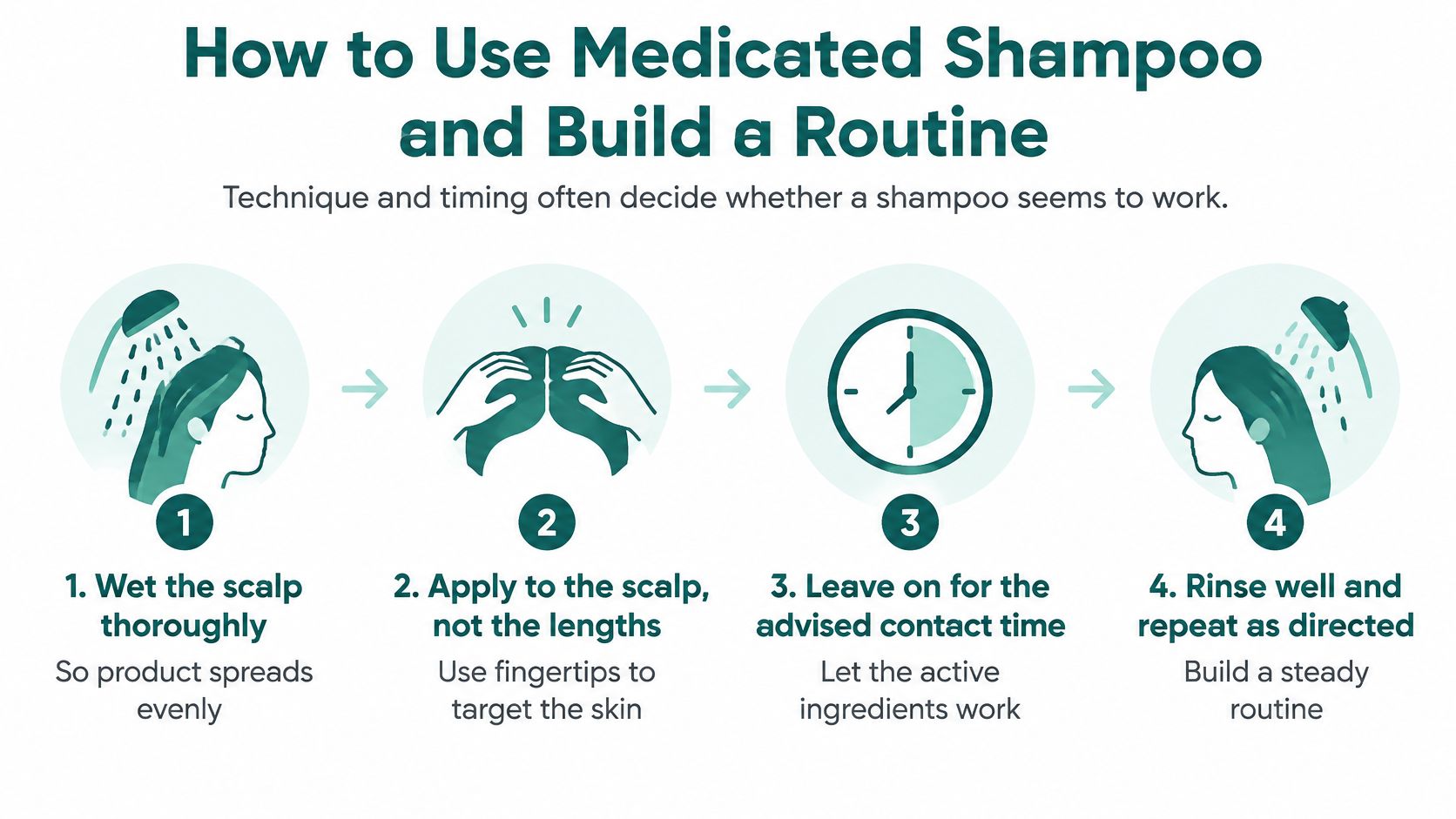
The application sequence below keeps the focus on the skin beneath the hair.
Apply the Formula Where It Is Needed
- Wet the scalp thoroughly. Water needs to reach the skin, particularly beneath dense hair. Parting the hair with the fingers helps prevent a dry patch underneath an apparently wet surface.
- Apply to the scalp rather than coating the lengths. Distribute the shampoo across affected areas using fingertips. A large pile of foam on the hair doesn't confirm that the product has reached the scalp.
- Massage gently to loosen surface flakes. Use the pads of the fingers, not fingernails or a stiff scrubber. Attached scale shouldn't be forcibly scraped away.
- Observe the specific contact time. A DailyMed-listed pyrithione-zinc shampoo label directs users to leave the product on for two to three minutes before rinsing. Other formulas have different directions, so timing shouldn't be borrowed from another bottle.
- Rinse thoroughly. Separate sections of hair while rinsing, including behind the ears and at the nape. Residual cleanser can leave an already uncomfortable scalp feeling worse.
- Condition the lengths and ends. Ordinary hair conditioner can help with tangling and dryness without needing to coat irritated scalp skin. A prescribed or specifically labeled scalp conditioner is a separate case.
- Keep to the labeled frequency. Extra applications aren't automatically helpful. The amount used, frequency and duration should come from the particular product's directions or a clinician's advice.
Build a Repeatable Schedule
NHS formulary guidance on seborrhoeic dermatitis describes ketoconazole shampoo use twice weekly for two to four weeks, with approximately five minutes of scalp contact. That is a treatment-specific example, not a universal schedule for every anti-dandruff shampoo.
On other wash days, a gentle cleanser may be more comfortable. Once symptoms improve, recurrent dandruff or seborrheic dermatitis may need intermittent maintenance according to the label or clinical advice. A guide to medicated shampoos for seborrheic dermatitis can help readers understand the distinction between an initial course and ongoing care.
A tight scalp with dry-looking flakes and no greasiness may be better served by gentler cleansing and moisturizing care. Increasing medicated-shampoo frequency because flakes remain can make it harder to identify whether dryness is contributing.
More burning doesn't mean more treatment activity. Persistent irritation is a reason to reassess the routine, not to scrub harder.
Avoid Changes That Obscure the Result
The most common mistakes are immediate rinsing, vigorous scratching, skipped applications and rapid product switching. Introducing several new products together also makes a reaction difficult to trace.
A simple written record can note flaking, discomfort and redness under similar conditions each week. Comparing the scalp immediately after washing with the scalp just before the next wash is more useful than judging scattered impressions.
Pre-wash care has a different role from shampooing. A product designed to sit on the scalp before cleansing shouldn't be used as though it were an ordinary rinse-off shampoo, and longer exposure doesn't automatically establish greater medical effectiveness.
Marked dryness, burning or worsening redness warrants reducing or stopping the suspect product and seeking advice. A routine should become easier to tolerate, not progressively harder to endure.
Sphagnum Botanicals Options and Where Each One Fits
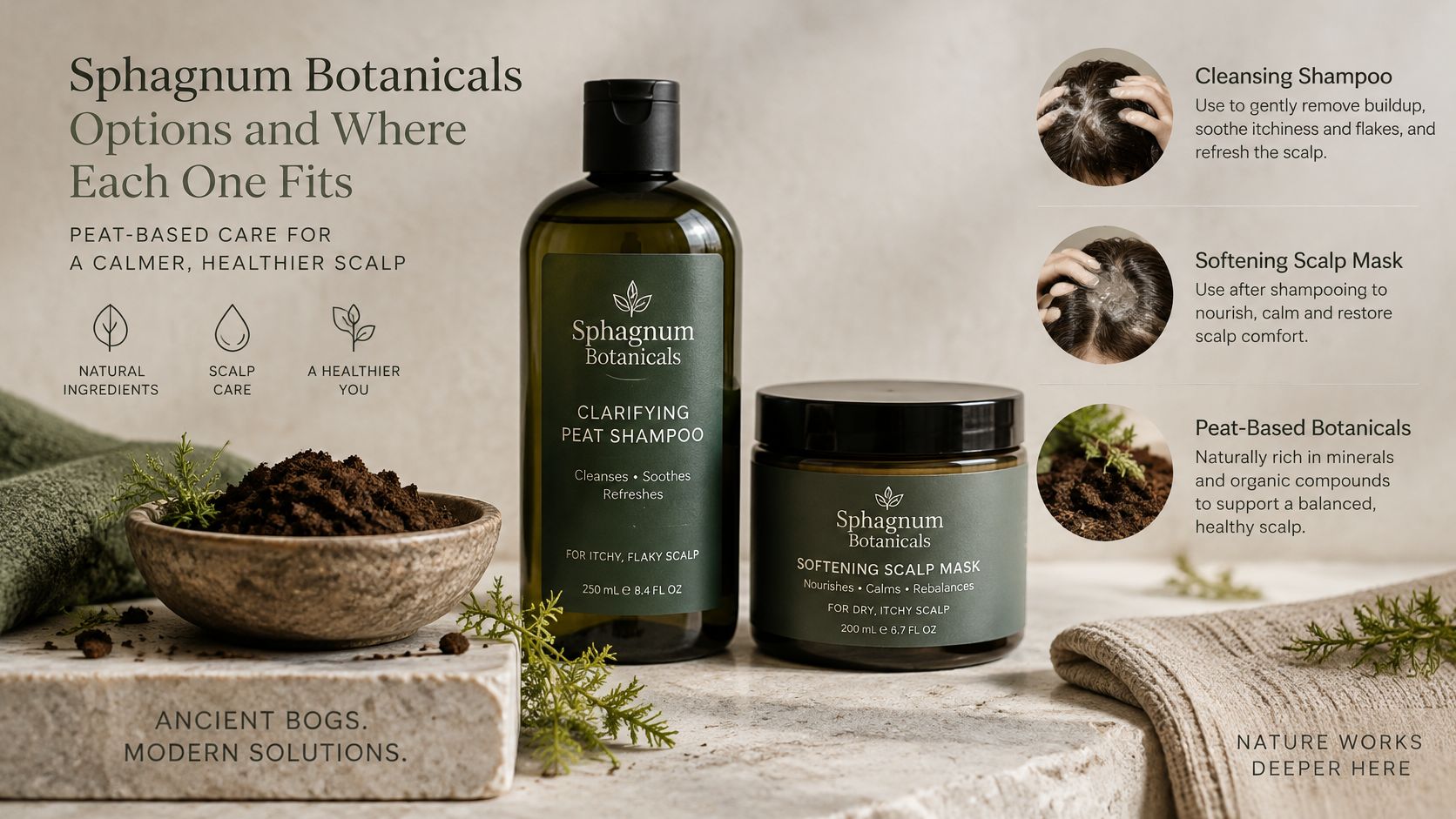
Sphagnum Botanicals offers peat-based cleansing and scalp-care options alongside salicylic-acid formulas. Peat is decomposed plant material and a natural source of humic substances; in cosmetics, its role should be discussed in terms of cleansing and skin feel, not assumed disease treatment.
The pictured products illustrate the distinction between cleansing and additional scalp-care steps.
Products by Role
| Product | Main ingredients | Suits | Limits |
|---|---|---|---|
| PsoriAid+ Shampoo | Salicylic acid, peat, menthol | Visible thick flakes and buildup, used according to labeling | Salicylic acid can dry or irritate |
| PsoriAid Mild Peat Shampoo | Peat, tea tree oil, menthol; no salicylic acid | Frequent gentle cleansing of an itchy, red-feeling scalp | Not the scale-softening option |
| PsoriAid Pre-Shampoo Scalp Serum | Check the current ingredient label | Pre-wash scalp care | Not a shampoo replacement |
| DermAid Anti-Dandruff Shampoo | Check the current full active list | Frequent cleansing of irritated, flaky scalps per label | Active concentrations require label confirmation |
| PsoriAid Body Wash | Peat, olive oil | Gentle cleansing of dry, sensitive-feeling body skin | Not designed for scalp use |
The PsoriAid Moderate Routine combines PsoriAid+ Shampoo with 3% salicylic acid, Hair Therapy Conditioner and PsoriAid Body Wash. Its relevant cosmetic role is visible-flake and buildup removal paired with hair conditioning and body cleansing, not treatment of an undiagnosed scalp disorder.
PsoriAid Mild Peat Shampoo fits a different need: frequent gentle cleansing without salicylic acid. PsoriAid Pre-Shampoo Scalp Serum can remain on the scalp for approximately 20–30 minutes before shampooing, following its current directions. That pre-wash interval describes how it is used, not proof that it is medically more effective than shampoo.
The accompanying video provides additional product context.
Ingredient Findings Aren't Product Trials
A randomized, single-blind tea tree shampoo study tested a 5% formula in 126 participants aged 14 or older, used daily for four weeks, and found 41% improvement in a quadrant-area-severity score versus 11% with placebo. Self-assessed itchiness and greasiness improved, but self-assessed scaliness didn't improve significantly.
Those results belong to the tested shampoo, not PsoriAid Mild Peat Shampoo, and don't establish its tea tree concentration. Menthol's refreshing sensation likewise shouldn't be mistaken for evidence that a medical condition is improving.
The same evidence-reading habit applies beyond scalp care. BIOVELVET™ on aloe and burns provides a separate ingredient-focused discussion, where distinguishing a studied preparation from a general botanical claim also matters.
When Flakes and Itching Need a Clinician
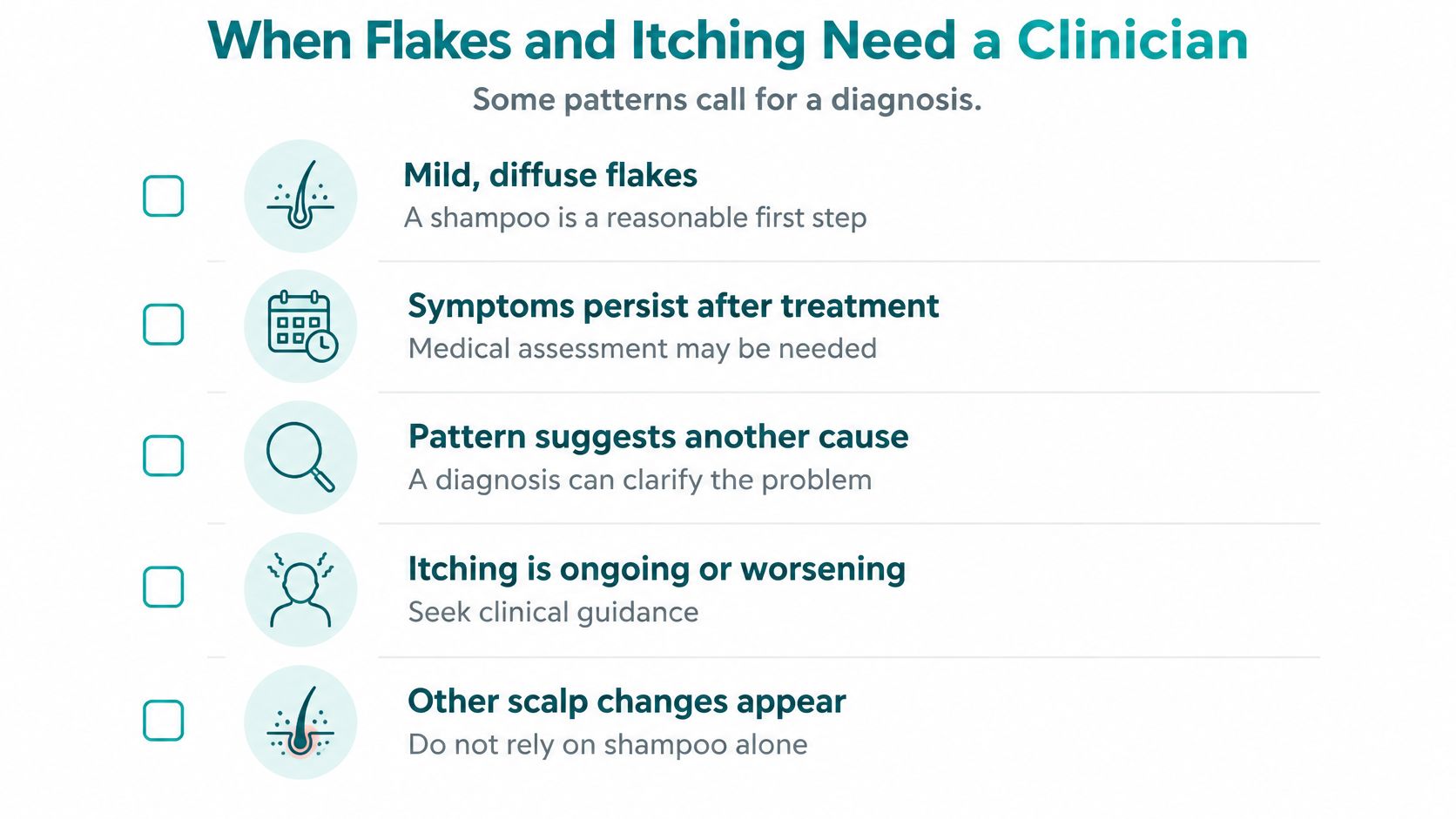
A shampoo trial is reasonable for mild, diffuse flakes. A changing scalp, significant discomfort or hair loss deserves assessment rather than another product purchase.
The American Academy of Dermatology's scalp-itch guidance explains that dandruff, reactions to hair products, psoriasis, eczema and scalp ringworm can all cause itching. Similar symptoms don't imply interchangeable treatments.
The checklist highlights when shampoo alone may be insufficient.
Signs That Merit Assessment
- Sharply edged thick plaques or silvery scale. These can suggest psoriasis rather than ordinary dandruff.
- Pain, bleeding, oozing or pus. Broken or infected-looking skin needs prompt professional attention.
- Patchy hair loss or spreading rash. Scalp infection and other disorders can require treatment that shampoo can't provide.
- Marked burning, redness or swelling. A reaction to a product shouldn't be managed by repeatedly applying it.
- Persistent symptoms despite correct use. Lack of improvement calls for reconsidering the diagnosis.
- Rapid recurrence after stopping. This can justify a maintenance discussion, especially when the original diagnosis was uncertain.
Severe or rapidly worsening symptoms shouldn't wait for completion of a shampoo trial. For hair loss occurring alongside scalp changes, a medical appointment can address both concerns; hair loss consultations at Yoyime Clinic are one example of a dedicated assessment service.
Prepare Useful Information
A clinician may examine the scalp, review the distribution of scale and consider whether testing or prescription treatment is appropriate. Psoriasis, allergic contact dermatitis and fungal infection can require different approaches even when all produce visible flakes.
Useful appointment materials include photographs taken before washing, the actual shampoo bottles or ingredient lists, and notes about symptom onset. The timing of a new dye, styling product or treatment can be particularly informative.
Appointment preparation: A clear account of what changed, what was applied and what happened afterward is more useful than a long list of products labeled soothing.
A cosmetic cleanser can remain part of comfortable everyday care, but it shouldn't delay diagnosis when the skin is painful, damaged or persistently inflamed.
Pick One Shampoo Plan and Give It Four Weeks
Choose one main approach rather than layering several new formulas. The next useful step is a manageable plan based on the scalp's current pattern, with room to stop early if irritation develops.
Match the Plan to the Pattern
- Dryness predominates. A gentle non-medicated cleanser and moisturizing care are a sensible starting point when flakes are fine and the scalp feels tight rather than greasy.
- Greasy scale repeatedly returns. An anti-dandruff shampoo containing a trial-supported active, such as ketoconazole or ciclopirox, is more relevant than cosmetic cleansing alone.
- Attached scale dominates. A salicylic-acid product may help with visible buildup when used according to its labeling.
- Concerning changes appear. Medical review takes priority over adding another bottle.
A weekly note on flakes, itch and redness helps distinguish genuine progress from a temporarily clean appearance. A fair trial means correct application and reasonable consistency, not continuing through burning or worsening symptoms.
For frequent gentle cleansing, PsoriAid Mild Peat Shampoo fills a different role from PsoriAid+, which is the salicylic-acid option for visible thick flakes according to its labeling. Neither product name establishes the cause of a scalp problem.
This week, select one suitable shampoo, record the starting symptoms and follow its directions consistently. Readers considering peat-based cosmetic care can review the scalp-care range and check the current product labels before choosing. Persistent symptoms or any concerning scalp changes call for a clinician's assessment, because shampoo choice supports care but doesn't replace diagnosis.