

You wash in the morning, and by lunch visible flakes are back on your shoulders. Your scalp feels tight after rinsing, itchy by evening, and scratching only makes the flaking more obvious. Sulfates such as SLS and SLES are cleansing agents that create foam and remove oil and buildup. They're not harmful, but some people with a dry or sensitive-feeling scalp prefer a cleanser that leaves less of that squeaky, tight feeling, especially if washing is frequent. Hard water can add to residue and dryness, so hard water effects on skin and hair are worth considering alongside the shampoo itself.
A 2015 peer-reviewed review estimated that dandruff affects approximately 50% of the general adult population worldwide, according to the peer-reviewed review in PMC. This roundup judges each best sulfate free dandruff shampoo candidate for sensitive and psoriasis-prone scalps by three criteria: active ingredient, gentleness, and how often it can realistically be used.
1. Anti-Dandruff Shampoo with 3% Salicylic Acid and Peat, Removes Flakes and Relieves Itching, SLS/SLES Free
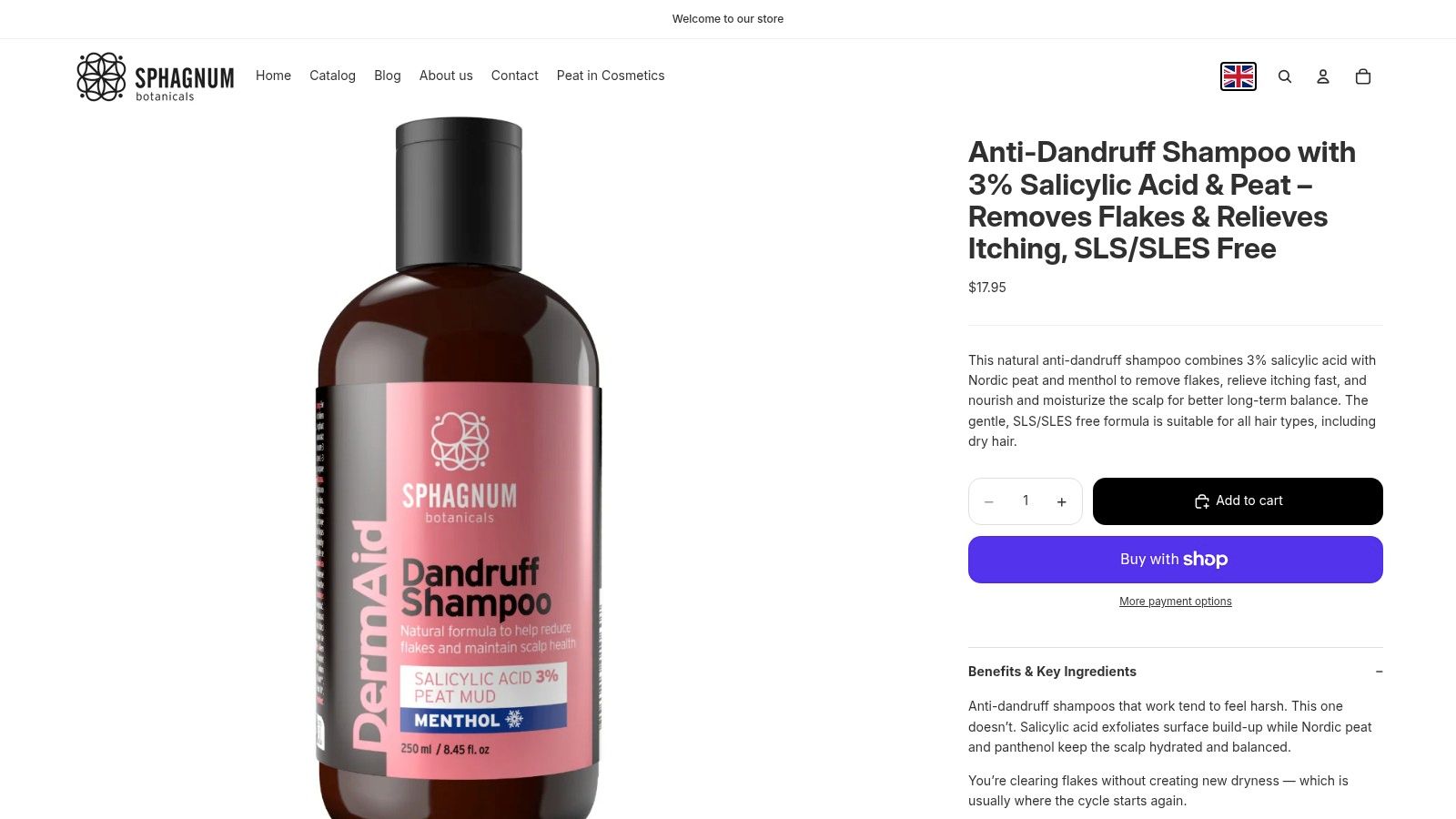
This is the clearest medicated option in the list because the active is stated upfront. The Anti-Dandruff Shampoo with 3% Salicylic Acid & Peat – Removes Flakes & Relieves Itching, SLS/SLES Free combines 3% salicylic acid with Nordic peat and menthol in an SLS/SLES free formula described for all hair types, including dry hair. Salicylic acid is a keratolytic, meaning it helps loosen and lift visible scale and buildup so flakes rinse away more easily.
That distinction matters. A sulfate-free base describes how the product cleanses, not what addresses flaking. The U.S. FDA monograph lists salicylic acid at 1.8–3% among recognized OTC dandruff actives, according to the FDA OTC monograph for dandruff products. Readers comparing labels can use that range as a regulatory reference point, while following the finished product's own directions.
Where It Fits and Where It Falls Short
- Best fit: Noticeable, stuck-on flakes and buildup where exfoliation is the main need, rather than a mild daily wash.
- Sensory trade-off: Menthol gives a refreshing, cooling sensation that many users like on an itchy-feeling scalp, but sensitive users may find tingling formulas less comfortable.
- Frequency trade-off: A 3% salicylic acid shampoo is usually a periodic treatment wash, not automatically a twice-daily cleanser. Hair can feel drier if it's used too often without conditioner on the lengths.
- What it isn't: Salicylic acid helps remove scale. It doesn't replace an antifungal approach when a clinician has identified a yeast-associated condition.
Practical rule: Apply medicated shampoo to the scalp, not the lengths. Condition the mid-lengths and ends separately so the active reaches skin without drying hair unnecessarily.
For background on how this active is used in scalp care, the guide to salicylic acid anti-dandruff shampoo explains the cosmetic role in more detail. On balance, this pick earns its place for visible flake removal with a stated active strength. Its weakness is the same as its strength: exfoliation needs sensible frequency, and sensitive scalps should start slowly and stop if stinging or worsening discomfort occurs.
2. PsoriAid Pre-Shampoo Intensive Scalp Serum, Salicylic and Botanical Care for Heavy Scaling and Itching, Sulfate Free, 50 ml
When flakes cling in thick patches, applying a scalp product in sections can be more practical than relying on shampoo to reach every area evenly. A pre-shampoo step also adds time to the routine, so it suits targeted care better than a quick wash.
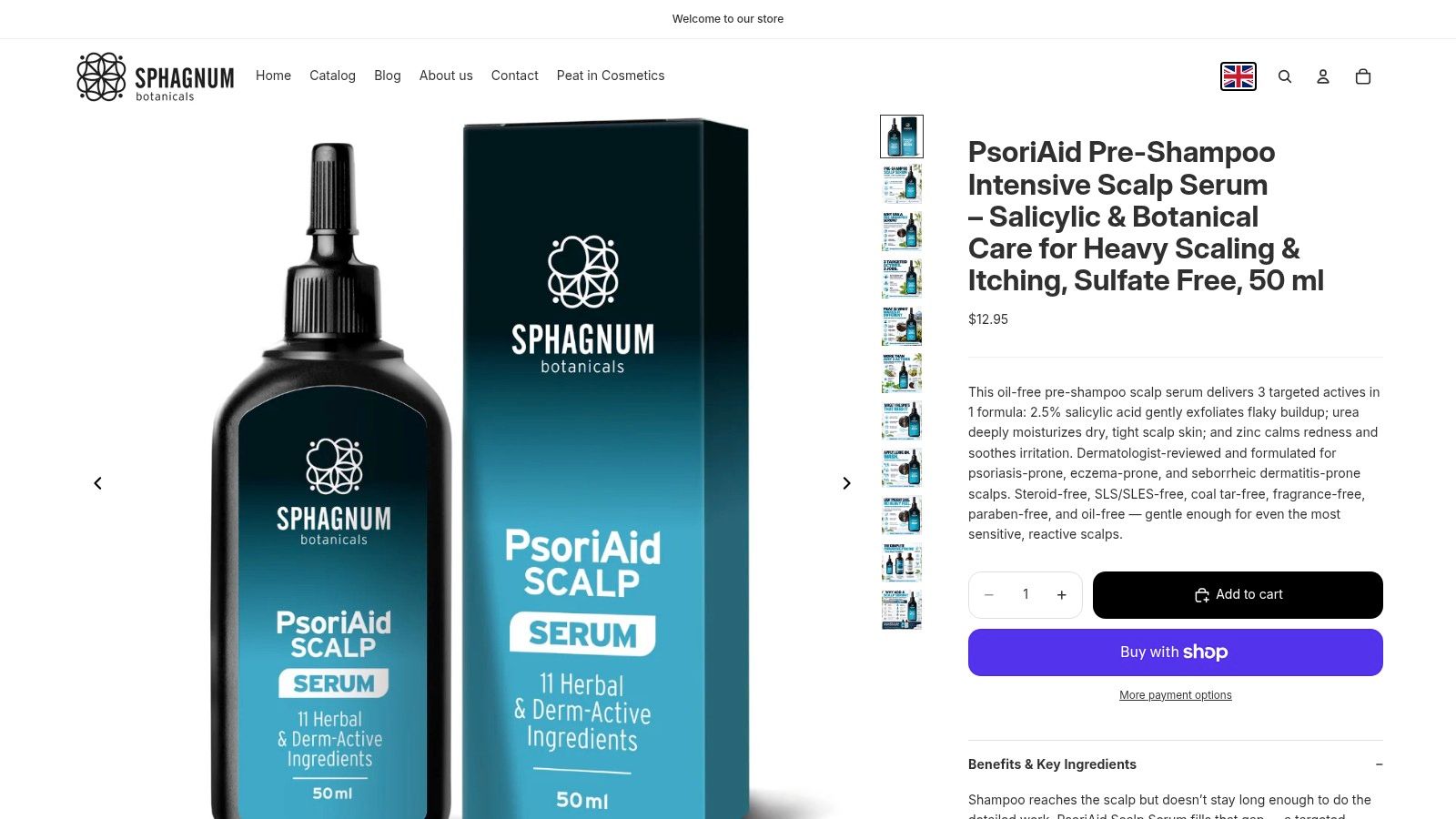
The catalog describes Sphagnum Botanicals' PsoriAid range as scalp care for visible flakes and psoriasis symptoms, but does not list a pre-shampoo serum. That means its concentration, size, directions, and specific ingredients cannot be established here. For heavy scaling, choose a product whose label clearly states its active ingredients and use instructions, then follow those directions.
Using a Pre-Shampoo Step
If a scalp treatment is intended for use before shampoo, part the hair and apply it directly to the affected skin rather than coating the lengths. Follow the product's stated contact time, then wash it out thoroughly. This format can make targeted application easier, but it adds a step and still requires a shampoo afterward.
Salicylic acid is used in scalp products to loosen flaky buildup; urea can help moisturize dry-feeling skin. A study of a different shampoo combination, containing luliconazole, salicylic acid, and zinc pyrithione, reported reduced severity after four weeks of use, but its results do not establish how an unlisted serum performs.
The practical trade-off is straightforward: a leave-on pre-wash treatment takes more time than a rinse-off shampoo and may be unnecessary for loose, mild flakes. For persistent or heavy scaling, use a clearly labeled product as directed and seek professional advice if symptoms continue or worsen.
3. Natural Hair Growth Shampoo with Nordic Peat Mud and Tea Tree Oil, Daily Use, SLS/SLES Free
Not every wash day needs a keratolytic. Between active washes, many people need a gentler cleanser that removes oil and styling residue without leaving hair rough. This pick sits in that maintenance role, with an important caveat about expectations.
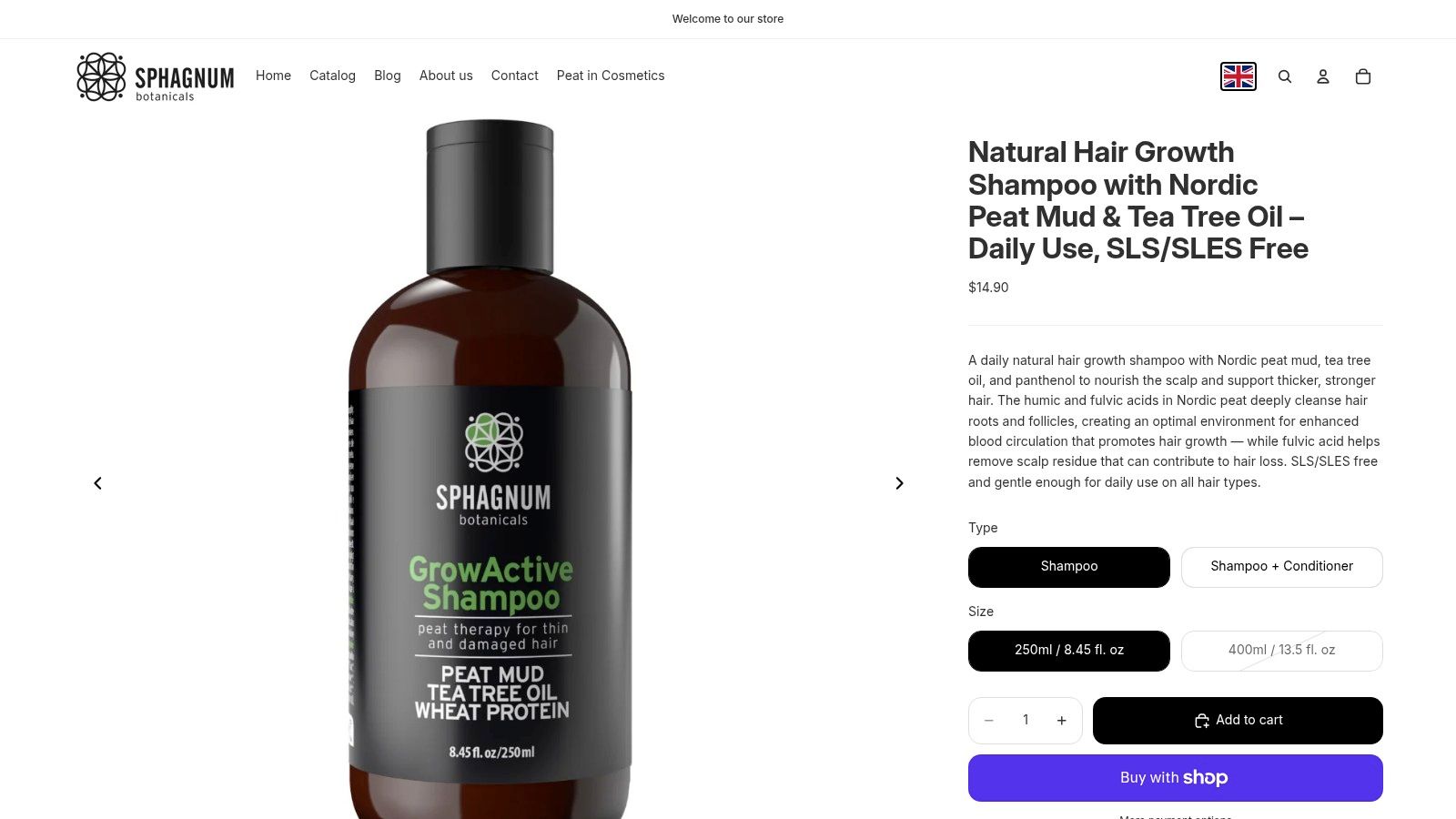
The Natural Hair Growth Shampoo with Nordic Peat Mud & Tea Tree Oil – Daily Use, SLS/SLES Free contains Nordic peat mud, tea tree oil, and panthenol, and is described as gentle enough for daily use on all hair types. Peat is included as a distinctive cosmetic ingredient and a natural source of humic substances. Panthenol is a familiar conditioning ingredient that can help hair feel softer and more manageable.
Maintenance Strengths and Limits
- Best fit: Frequent washers, oily-feeling roots between medicated washes, and users who want a sulfate-free daily cleanser alongside a separate active routine.
- Gentleness: No salicylic acid is stated for this formula, so it isn't positioned around exfoliating thick scale.
- Hair feel: Daily formulas live or die on whether lengths stay manageable. Conditioning after washing remains important for dry, curly, or color-treated hair.
- Main con: The name emphasizes hair growth support and fuller-looking hair, which isn't the same as a recognized dandruff active strategy.
Maintenance is not a minor detail. In a large trial, 1% ciclopirox shampoo used once or twice weekly for four weeks outperformed vehicle, and responders maintained control with once-weekly or once-every-two-weeks use, according to the JAMA Dermatology trial report. That evidence concerns ciclopirox, not this peat shampoo. It supports a broader point: after an intensive phase, a tolerable routine people keep using often matters more than adding more products.
Judged as a best sulfate free dandruff shampoo on its own, this one is weaker because no established dandruff active or concentration is provided. Judged as a daily companion cleanser for sensitive-feeling scalps, it's more defensible. People with persistent flaking shouldn't rely on gentle cleansing alone and assume the underlying cause is covered.
4. Psoriasis Shampoo, Salicylic Acid Plus Peat Plus Menthol, Scalp Relief Shampoo for Severe Flakes and Itching
When scale builds up, a shampoo that loosens flakes can be more useful than a gentle cleanser alone. Salicylic acid exfoliates; menthol provides a cooling sensation. Peat is part of the formula's distinctive profile, though natural origin does not guarantee that a product will suit every sensitive scalp.
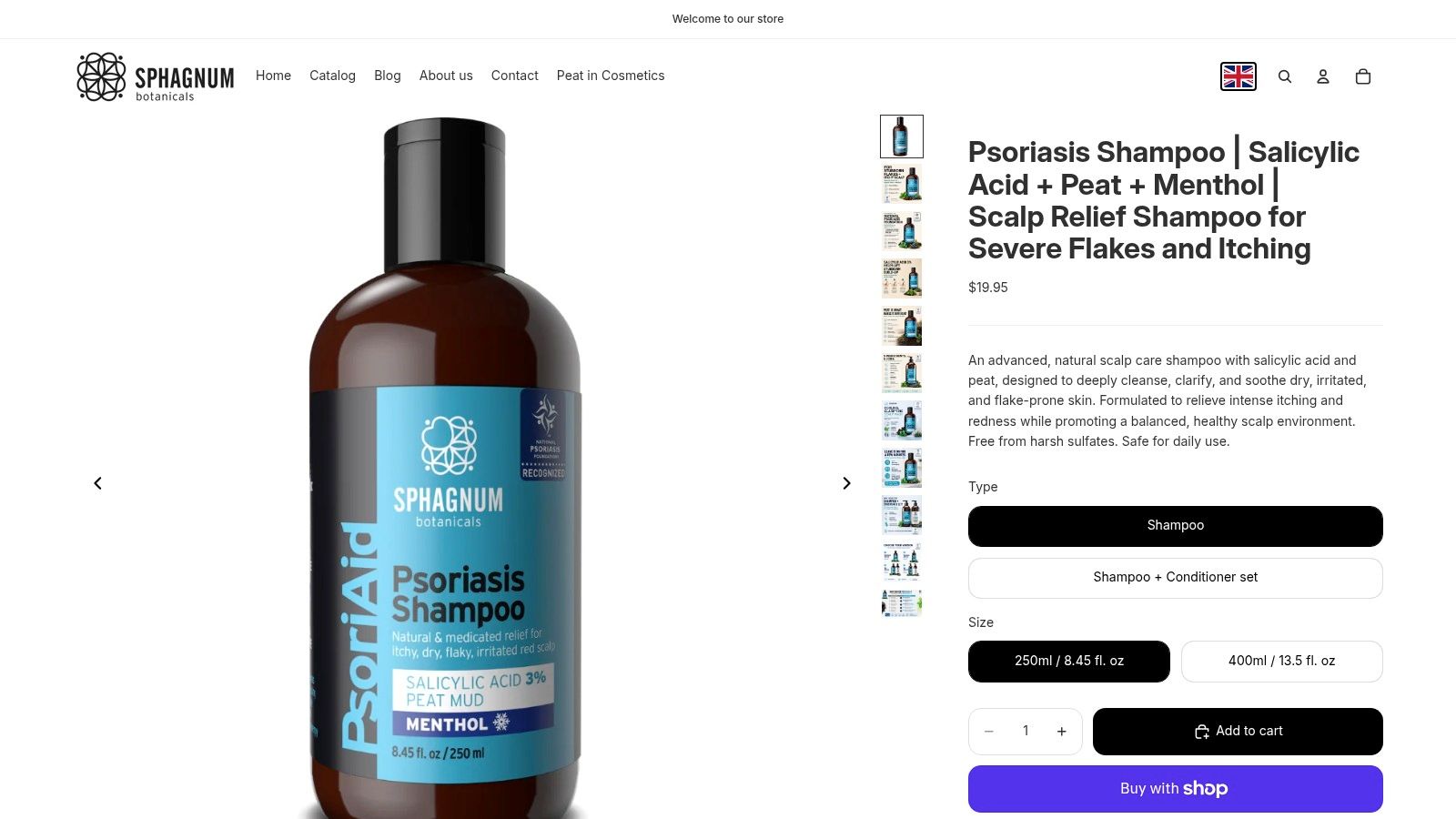
The Psoriasis Shampoo with salicylic acid, peat, and menthol is described as free from SLS and SLES. The salicylic acid strength is specified on the bottle, so check the label for the exact product you buy. Because salicylic acid is an exfoliating active, use this as a periodic treatment wash rather than assuming it is suitable for daily use. For background on the brand's core ingredient, see facts about peat for skin and scalp care.
Honest Trade-Offs for Heavier Flaking
Salicylic acid helps loosen scale for washing, making it useful when flakes are visible and persistent. Menthol adds a cooling feel, which some users may appreciate, while others with sensitive scalps may find the sensation uncomfortable. Peat gives the formula its distinct character, but it should not be treated as a dandruff active or a substitute for medical care.
The American Academy of Dermatology lists six established dandruff-shampoo ingredients: zinc pyrithione, salicylic acid, sulfur, selenium sulfide, ketoconazole, and coal tar, in its dandruff guidance. The active matters when choosing a shampoo for a particular concern. If a clinician recommends an antifungal such as ketoconazole, a salicylic acid wash is not an equivalent replacement.
For a shampoo, conditioner, and body cleanser in one set, the PsoriAid Moderate Routine includes PsoriAid+ Shampoo with 3% salicylic acid, used 2–3 times per week and left on for 2–3 minutes, alongside conditioner and a peat and olive oil body wash. The benefit is a coordinated routine; the drawback is that a bundle may be unnecessary if you need only a scalp shampoo.
5. PsoriAid Shampoo with Tea Tree Oil and Peat, Relieves Itching and Redness on Psoriasis-Prone, Sensitive Scalp, Daily Use
Daily comfort is the test for this final pick. A sensitive-feeling, psoriasis-prone scalp may need frequent gentle cleansing, yet repeated exfoliation isn't always welcome. This formula takes the softer route and, unlike the salicylic acid options, does not contain salicylic acid.
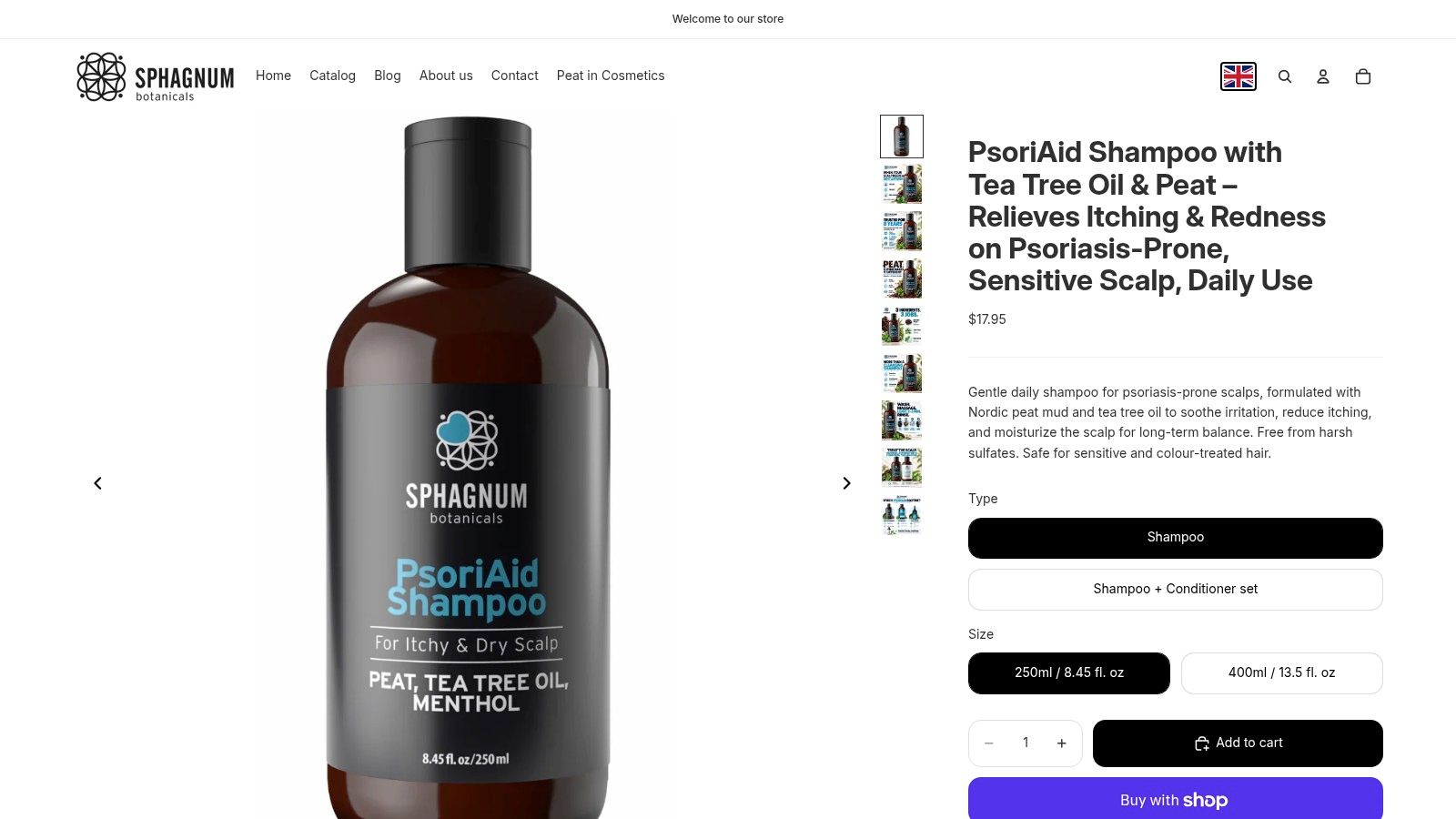
The PsoriAid Shampoo with tea tree oil and peat is positioned for frequent scalp cleansing and care with Nordic peat, tea tree oil, and menthol. It's described as free from SLS and SLES and suitable for sensitive and colour-treated hair. In cosmetic terms, it gently cleanses, helps remove visible flakes and buildup, helps moisturize a dry-feeling scalp, and leaves the scalp feeling more comfortable.
What Tea Tree Research Does and Doesn't Show
Tea tree oil has been studied for dandruff, but ingredient research isn't proof for this finished product. One randomized, single-blind study of 126 participants aged 14 years and older found that a 5% tea tree oil shampoo used daily for four weeks improved the severity score by 41%, compared with 11% for placebo, reported in the PubMed record for the tea tree oil shampoo study. The concentration in the PsoriAid formula isn't stated here, so that result shouldn't be transferred to it.
Further reading on anti-dandruff shampoo with tea tree oil can help readers separate ingredient interest from finished-product claims. The FDA also explains that cleansing hair is a cosmetic use while treating dandruff is a drug use, in the FDA guidance on cosmetics and drugs. That boundary keeps expectations realistic.
Pros are daily-use positioning, no salicylic acid for users who prefer to avoid frequent exfoliation, and suitability for colour-treated hair as described. Cons are equally clear: tea tree scent and menthol tingle won't suit everyone, and thick scale may need a keratolytic or professional care. As a best sulfate free dandruff shampoo for mild flaking and daily comfort, it's coherent. As a sole answer to persistent, inflamed-looking flaking, it isn't enough.
Sulfate-Free Dandruff Shampoos Compared
The formulas differ most in their active ingredients, format, and stated use frequency. The table compares those details alongside listed formulation features, without treating “sulfate-free” as a measure of how gentle a product will feel on every scalp.
| Product | Active ingredients | Format | Gentleness features | Recommended frequency |
|---|---|---|---|---|
| Anti-Dandruff Shampoo with 3% Salicylic Acid and Peat | 3% salicylic acid, Nordic peat, menthol | Shampoo | SLS/SLES-free; listed for all hair types, including dry hair | Not stated |
| PsoriAid Pre-Shampoo Intensive Scalp Serum | 2.5% salicylic acid, urea, zinc | Pre-shampoo scalp serum | Fragrance-free, oil-free, SLS/SLES-free; steroid- and coal-tar-free | Not stated |
| Natural Hair Growth Shampoo with Nordic Peat Mud and Tea Tree Oil | Nordic peat mud, tea tree oil, panthenol | Shampoo | SLS/SLES-free; listed for daily use on all hair types | Daily use |
| Psoriasis Shampoo, Salicylic Acid Plus Peat Plus Menthol | Salicylic acid, peat, menthol | Shampoo | Sulfate-free | Daily use |
| PsoriAid Shampoo with Tea Tree Oil and Peat | Nordic peat mud, tea tree oil | Shampoo | Sulfate-free; listed for sensitive and colour-treated hair | Daily use |
How to Choose and When to See a Professional
Match the product to the scalp situation, not to the strongest claim on the bottle. For mild, loose flakes and frequent washing, the daily tea tree and peat shampoo or the peat mud daily cleanser fits a gentle maintenance routine. For visible buildup and stuck-on scale, a salicylic acid shampoo has a clearer cosmetic job because it helps loosen flakes before rinsing. For heavy scaling in patches, use the pre-shampoo serum first, leave it on as directed for about 20 to 30 minutes, then shampoo the scalp thoroughly and condition only the lengths.
Technique still matters after the product is chosen. Massage shampoo into the scalp with fingertips, leave it for the time stated on its label, and rinse well. Don't judge a routine after two hurried washes, and don't increase frequency endlessly if tightness or stinging develops. Persistent itching can have several causes, including dandruff, dry skin, contact irritation, seborrheic dermatitis, and psoriasis, and those conditions don't all call for the same product. Guidance summarized by the Merck Manual on seborrheic dermatitis distinguishes ordinary flaking from seborrheic dermatitis, where antifungal shampoos may be first-line options.
Medical guidance also supports reducing medicated shampoo frequency after symptoms improve rather than stopping abruptly, as described in the Mayo Clinic seborrheic dermatitis treatment guidance. Seek a healthcare professional when symptoms are severe, persistent, painful, infected-looking, rapidly worsening, or accompanied by hair loss. Readers who want to prepare can review what to expect during scalp evaluation before an appointment.
Browse the sulfate-free scalp care range at Sphagnum Botanicals, compare the salicylic acid, tea tree, and pre-shampoo options above against your current flaking level, and start with the single product that matches your routine instead of buying the full shelf at once.