

You notice the itch halfway through a meeting. Later, white flakes appear on a dark sweater, or your scalp feels tight and prickly after washing. The instinct is often to scrub harder, wash more often, or switch products at random. That approach can leave the scalp more uncomfortable because the scalp is skin first, with its own barrier, oil balance, and microbial environment.
A scalp soothing shampoo can help, but only when you understand the job it's meant to perform. The right formula should clean without excessive stripping, loosen unwanted scale when needed, and leave enough comfort behind to reduce the urge to scratch. Water quality can also contribute to dryness, so it's useful to recognize the signs your tap water dries your skin before blaming every reaction on shampoo.

This guide follows a simple path from scalp biology to ingredient labels, washing habits, and routine design. If you're trying to separate ordinary dryness from visible scale, oil-related itching, or a psoriasis-prone pattern, the advice on itchy scalp causes and fast relief options can help you frame the problem before choosing a bottle.
The Itchy Scalp Moment Most People Know Too Well
A reader might describe the same cycle in different words. The scalp itches during the day, feels sore after scratching, then produces more visible flakes after a vigorous wash. Another person has no obvious flaking but feels a prickling sensation whenever shampoo touches the skin. Someone else notices that the hair looks clean while the scalp still feels tight.
These experiences matter because hair appearance and scalp comfort don't always move together. A shampoo can leave hair glossy while irritating the skin underneath, or it can remove surface scale without providing enough conditioning support to prevent post-wash discomfort. The scalp deserves its own assessment rather than being treated as a passive surface beneath the hair.
Start with the skin, not the bottle
The scalp barrier helps regulate water loss and protects the skin from everyday exposure. Sebum, sweat, styling residue, cleansing agents, and the scalp's microbial environment all interact there. When the barrier is reactive, a formula that feels refreshing on healthy skin may feel harsh after repeated use.
Look for patterns before shopping:
- Tightness after washing often points toward excessive cleansing, hot water, or a formula that doesn't suit your barrier.
- Fine, dry flakes may reflect dryness or irritation, especially when there's little redness.
- Greasy scale and persistent itch suggest that a simple moisturizing shampoo may not address the main issue.
- Thicker plaques, bleeding, or ongoing inflammation deserve medical attention rather than repeated product experimentation.
Practical rule: Treat comfort, flaking, oiliness, and redness as separate signals. One shampoo may not be designed to solve all of them.
By the end of this guide, you'll be able to read a label more intelligently. You'll know why salicylic acid and urea are useful for different kinds of scale, why humectants and conditioning agents matter after cleansing, and where a rinse-off product fits beside stronger treatments.
What a Scalp Soothing Shampoo Is Actually Doing
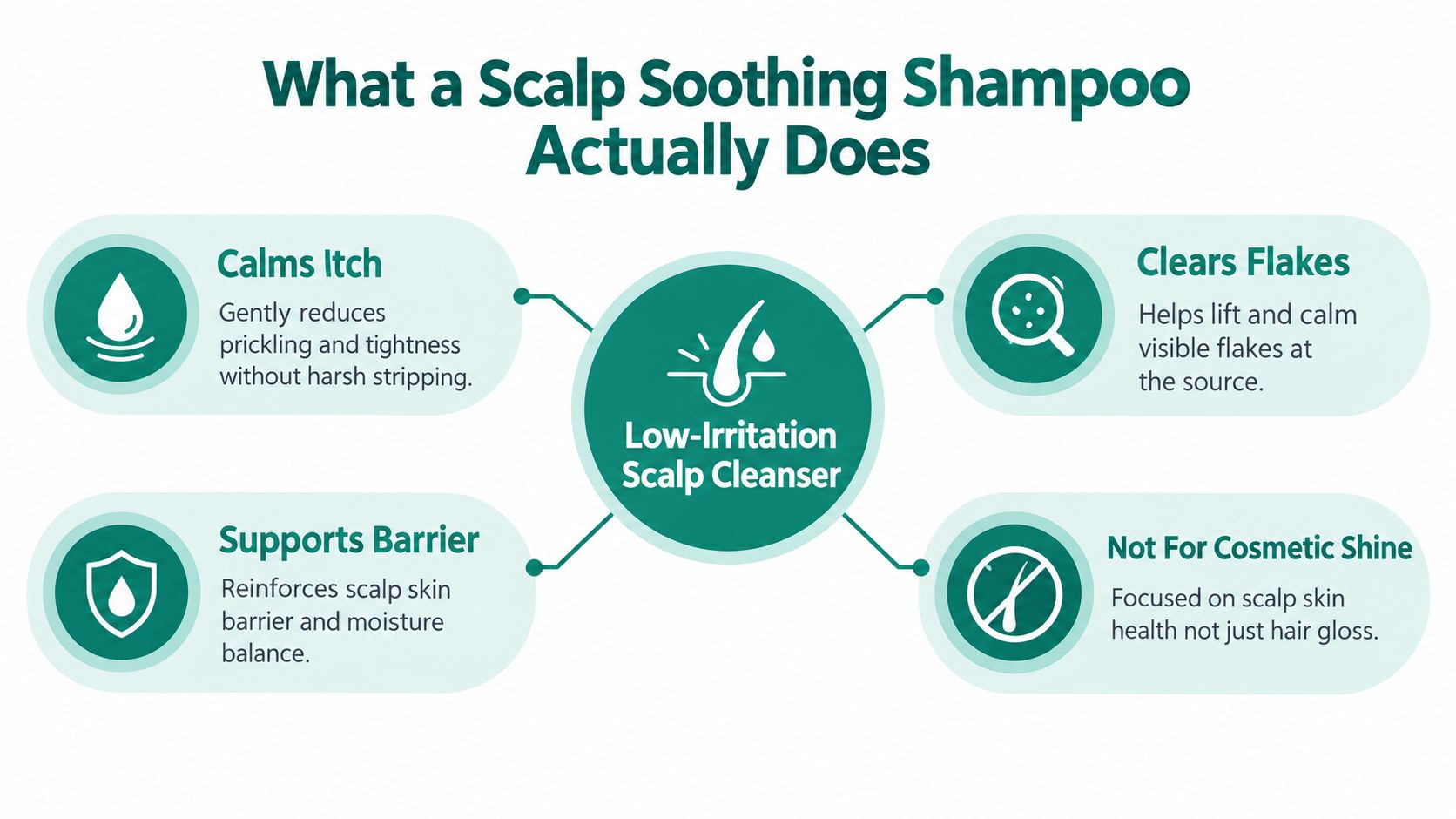
A scalp soothing shampoo is a low-irritation cleanser designed for the skin on your head. Its purpose isn't merely to create foam or make hair feel soft. It should remove sweat, sebum, and buildup while helping reduce the sensations and surface changes that make a scalp feel uncomfortable.
The formula usually balances three jobs.
Cleansing without overcorrection
Surfactants lift oil and debris so water can rinse them away. That's necessary, particularly for oily scalps or people who use styling products. The problem starts when cleansing removes more comfort than the scalp can quickly restore. A good soothing formula aims for a clean scalp without the squeaky, tight feeling that encourages more scratching.
Loosening scale at the surface
Keratolytics help loosen compacted dead skin. Salicylic acid is the familiar example, while urea can soften and hydrate thickened scale. These ingredients don't all serve the same purpose, and stronger active formulas may not be appropriate for every wash or every scalp.
Supporting the post-wash barrier
Glycerin, panthenol, aloe, conditioning agents, and other supportive ingredients can help the scalp feel less dry after cleansing. Removing flakes without addressing tightness may create a cycle in which the scalp looks cleaner briefly but feels increasingly reactive.
Why facial products don't automatically translate
Facial cleansers and moisturizers are formulated for a relatively exposed skin surface. Shampoo has to spread through hair, rinse thoroughly, and manage oil and residue in a different physical environment. A rich face cream may weigh down hair or leave residue, while a facial cleanser may not remove scalp buildup effectively.
A soothing shampoo also isn't automatically a treatment for a diagnosed condition. It can serve as a daily-friendly bridge between flare periods and stronger active products, but psoriasis, seborrheic dermatitis, infection, and unexplained hair loss may require a clinician's plan.
One example is Anti-Dandruff Shampoo with 3% Salicylic Acid & Peat, Removes Flakes & Relieves Itching, SLS/SLES Free, which is described as combining 3% salicylic acid with Nordic peat and menthol in an SLS/SLES-free formula for all hair types, including dry hair. That ingredient profile illustrates the central logic, surface exfoliation paired with scalp comfort, but individual tolerance still matters.
Key Ingredients That Calm an Irritated Scalp
Ingredient lists become easier to understand when you group ingredients by function instead of treating every botanical name as a promise. One family clears or softens surface scale. Another reduces the dry, tight feeling that can follow cleansing. A third supports comfort through humectancy, conditioning, or a cooling sensation.
Surface-scale support
Salicylic acid is a keratolytic. It helps loosen material that binds dead skin cells together, making it useful when flakes are adherent rather than loose and powdery. A clinical study in 67 adults with mild to moderate scalp psoriasis evaluated a shampoo containing 2% salicylic acid, 5% urea, and 1% glycerin. The Psoriasis Scalp Severity Index fell by 39.0% immediately after washing on Day 1 and 69.0% on Day 30, while the vehicle reached 22.8% and 13.0% at those same time points, respectively, according to the randomized, double-blind clinical study. The study also reported reduced irritation and improved quality-of-life scores.
Urea contributes in two ways. It attracts water and softens compacted scale, so it can make a keratolytic routine feel less aggressively exfoliating. Glycerin and panthenol are also humectant-style support ingredients. They help the formula address the dryness that often makes flaking feel worse.
Comfort and barrier support
Aloe is commonly used for a cooling, soothing feel, while bisabolol is included in formulas aimed at reducing the sensation of irritation. Niacinamide supports the skin barrier and can be useful when the scalp feels dry or easily unsettled. These ingredients aren't interchangeable with medical treatment, but they can improve how a cleanser feels during regular use.
Humic and fulvic acids from peat add another formulation angle. They're associated with mineral-rich, mildly exfoliating humic substances, which can be paired with moisturizing and conditioning ingredients for a flaky, reactive scalp. The important question isn't whether one ingredient sounds natural or advanced. It's whether the complete formula balances cleansing, scale management, and comfort.
Oil and itch considerations
Tea tree oil offers antimicrobial activity and may suit some oily, itch-prone scalps. It can also irritate sensitive skin, particularly when the formula is strongly fragranced or the scalp barrier is already compromised. Review the guidance on tea tree oil benefits, then patch test rather than assuming a plant-derived ingredient is automatically gentle.
| Ingredient | Primary role | Best for |
|---|---|---|
| Salicylic acid | Loosens adherent scale | Visible flakes and thicker buildup |
| Urea | Hydrates and softens scale | Dry, compacted, rough-feeling areas |
| Glycerin | Attracts water | Post-wash tightness and dryness |
| Aloe | Cooling, soothing feel | Mild irritation and discomfort |
| Bisabolol | Comfort-focused support | Reactive-feeling scalps |
| Tea tree oil | Antimicrobial support | Some oily, itch-prone scalps |
| Niacinamide | Barrier support | Dryness and sensitivity |
| Humic and fulvic acids | Mineral-rich, mildly exfoliating support | Flaky scalps needing a balanced formula |
The most useful pairing is often keratolytic plus conditioner-style support. One ingredient helps clear the surface, while another helps reduce the dry rebound that can trigger more scratching.
Why Sulfate Free Formulas Matter for Sensitive Scalps
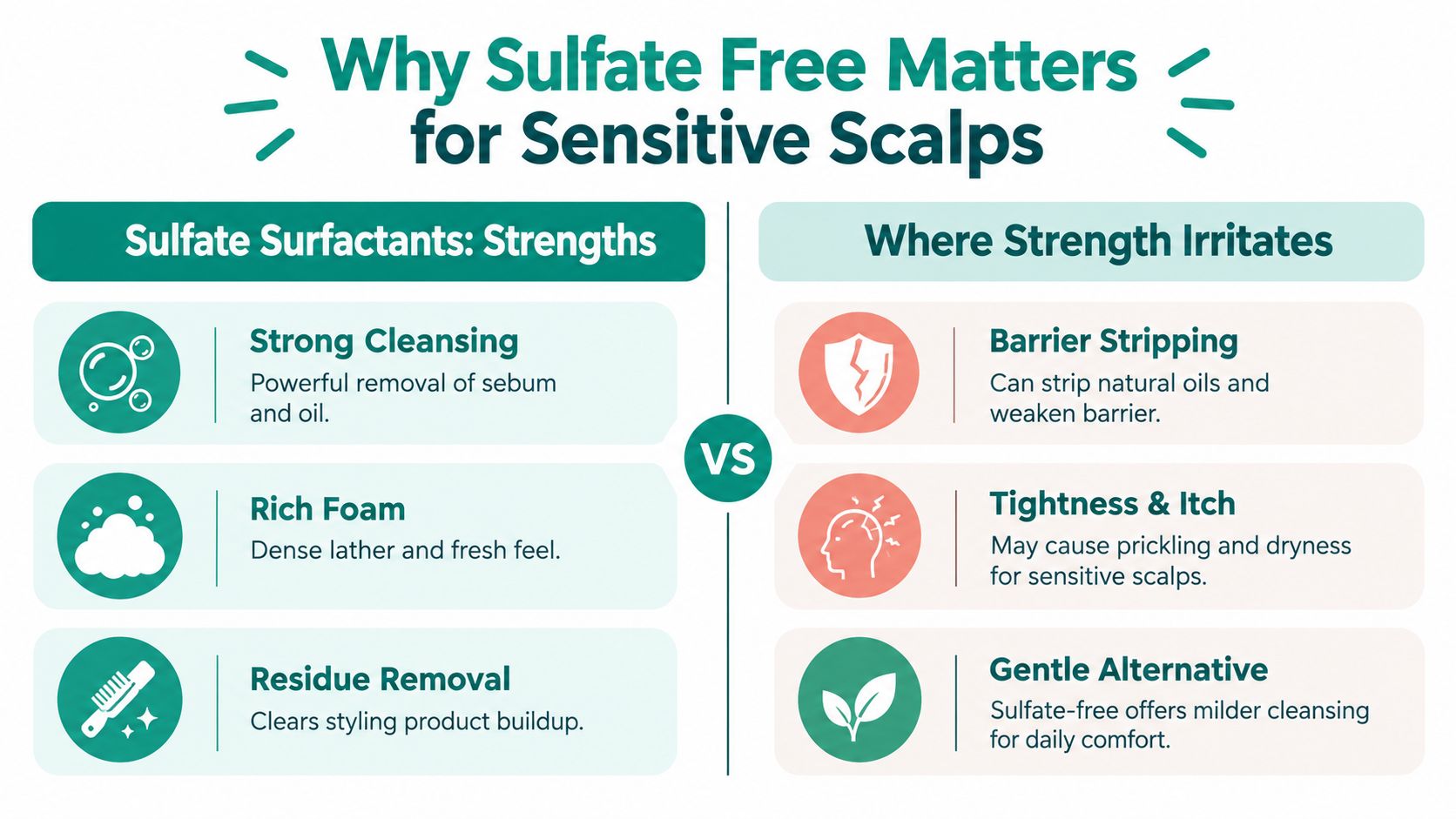
Sulfates aren't automatically harmful. Sulfate surfactants clean strongly, create rich foam, and remove sebum and styling residue efficiently. For someone with a resilient, oily scalp and substantial product buildup, that strength can feel useful.
The same strength can become uncomfortable when the scalp barrier is already compromised. Repeatedly aggressive cleansing may remove too much surface oil and leave a sensation of tightness, prickling, or dryness. That doesn't mean every sulfate-free shampoo will suit every person, or that every sulfate formula will cause irritation. It means surfactant strength should match the scalp's current condition.
The trade-off shoppers often miss
Sulfate-free formulas generally aim for milder cleansing and better daily comfort. They may produce less foam, and some may not remove heavy oil or styling residue as effectively in one wash. An oily scalp may therefore need careful technique, a second lather, or occasional use of a stronger cleanser rather than a permanent commitment to one formula.
Sensitive, reactive, or recently treated scalps often benefit from starting with a balanced or sulfate-free cleanser. If the scalp feels greasy, coated, or congested, adjust the cleansing pattern gradually instead of scrubbing harder.
A useful label-reading reference is this natural haircare label guide, particularly if you're trying to distinguish cleansing agents, fragrance components, and conditioning ingredients. Focus on the whole formula, not a single “free from” claim.
Formulation insight: “Sulfate-free” tells you what a formula excludes. It doesn't tell you whether the replacement surfactants, fragrance, active ingredients, and preservative system will feel comfortable on your scalp.
Here's a short visual explanation of the cleansing trade-off:
Occasional use of a stronger cleanser can fit an alternating routine, especially when buildup is obvious. The goal isn't to fear sulfates. It's to avoid making strong cleansing the default response to every itch.
Matching the Shampoo to Your Specific Scalp Situation
The same flake doesn't always mean the same problem. Start with the dominant signal, then choose a formula that addresses it without adding a new source of irritation.
Psoriasis-prone scalps
Thicker, firmly attached scale needs more than a basic moisturizing wash. Look for a keratolytic such as salicylic acid, supported by urea, glycerin, panthenol, or another cushioning ingredient. Use gentle fingertip pressure. Scraping plaques with nails can create soreness and small breaks in the skin.
A clinical study of a shampoo containing urea, glycolic acid, salicylic acid, ichthyol pale, and laureth 9 reported improved scalp and hair appearance, near-universal relief of irritation and itching, and benefits lasting at least 5 days after the last wash, as described in the clinical report on the multi-active shampoo. That supports the principle of combining scale-loosening ingredients with mild cleansing and conditioning support.
Seborrheic dermatitis
Greasy scale, recurring itch, and redness may need an antifungal active rather than soothing ingredients alone. A gentle cleanser can support comfort between medicated washes, but it shouldn't replace treatment recommended for a diagnosed condition. Avoid assuming that adding more oils will help, particularly if oiliness and adherence are central features.
Dry, flaky scalp without obvious inflammation
Choose humectants and lipid-supportive conditioners over aggressive clarifying. Urea, glycerin, panthenol, aloe, and niacinamide may be more relevant than a heavily exfoliating formula. Check whether washing frequency, hot water, fragranced styling products, or mineral-heavy water is contributing to the pattern.
Oily, itchy scalp with mild irritation
Prioritize balanced cleansing. You need enough surfactant activity to remove sebum, but not so much that the scalp feels stripped and uncomfortable soon afterward. A light soothing active, careful rinsing, and less product applied directly to the scalp can make a bigger difference than washing more often.
| Scalp situation | Dominant signal | Priority ingredients | Formulation cue |
|---|---|---|---|
| Psoriasis-prone | Thick, attached scale | Salicylic acid, urea, humectants | Keratolytic plus cushioning support |
| Seborrheic dermatitis | Greasy scale, recurring redness | Antifungal active, gentle cleanser | Medicated formula for treatment periods |
| Dry and flaky | Fine flakes, tightness | Glycerin, panthenol, aloe, niacinamide | Moisture-supportive, low-irritation cleansing |
| Oily and itchy | Sebum, itch, mild irritation | Balanced surfactants, light soothing agents | Effective cleansing without a stripped finish |
If redness, soreness, bleeding, or persistent plaques continue, a dermatologist can identify the condition more accurately than a label can.
Where Soothing Shampoos Fit in a Scalp Care Routine
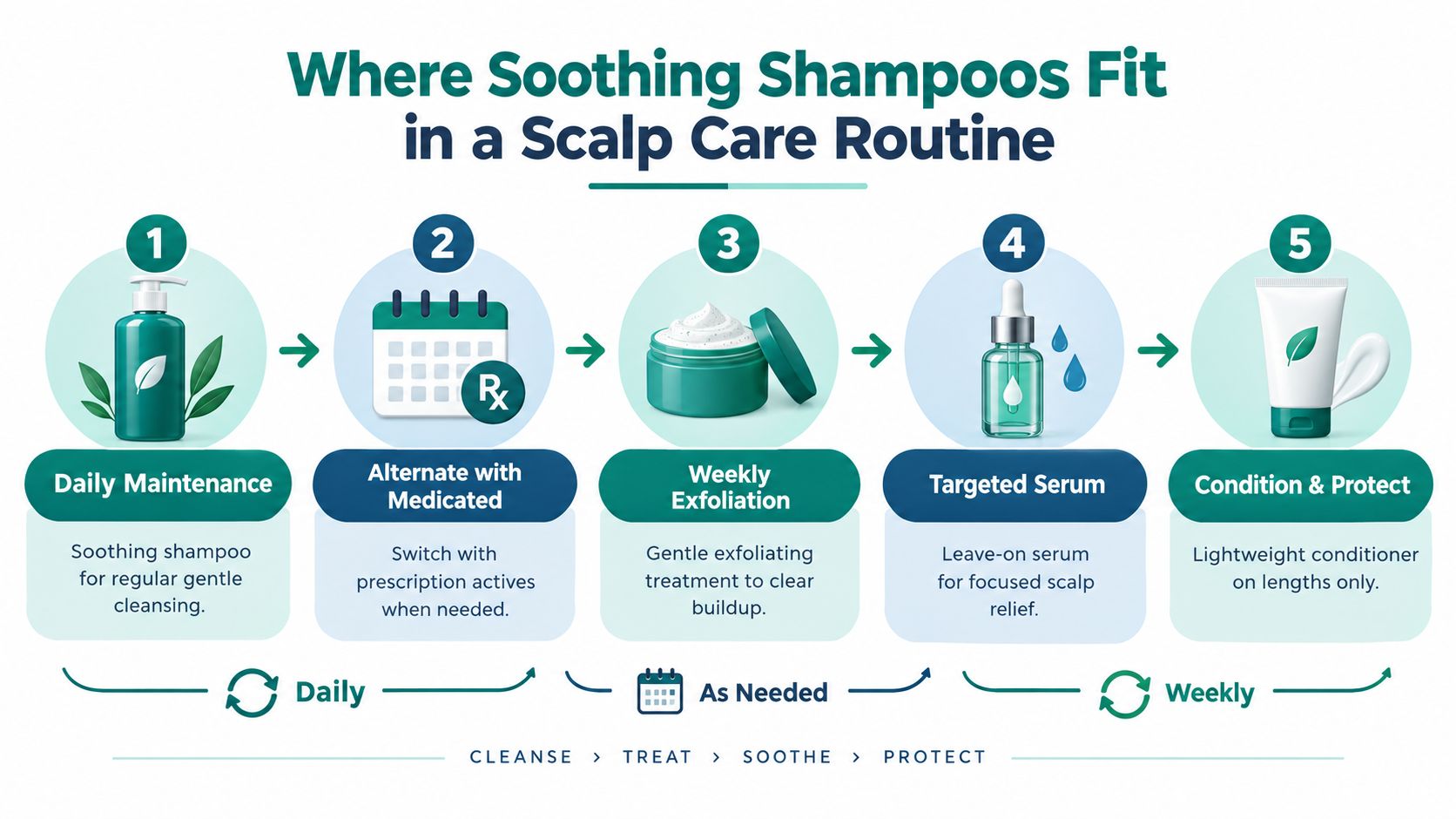
A soothing shampoo is usually the routine's foundation, not its entire treatment plan. It handles regular cleansing and helps keep the scalp comfortable between targeted interventions. Prescription products, medicated actives, exfoliating treatments, and leave-on serums have narrower jobs and may be used only when the scalp pattern calls for them.
During a flare, a clinician may recommend alternating a medicated shampoo with a gentler cleanser. The medicated product addresses the specific condition, while the soothing wash reduces the temptation to use the stronger product at every wash. Once inflammation settles, many people step back toward maintenance cleansing, provided their clinician agrees.
Layer products by purpose
Pre-shampoo oils can soften some dry areas, but they may be a poor match for an oily or dermatitis-prone scalp. If you use one, keep it targeted and rinse thoroughly. In the shower, apply shampoo to the scalp rather than rubbing a large amount through the lengths.
Leave-on serums earn their place when rinse-off care isn't enough for a particular concern. Apply them after washing only if the ingredients and instructions suit your scalp. Conditioner usually belongs on the mid-lengths and ends, where it can improve manageability without coating the scalp.
The same principle applies when comparing simple cleansing products, including options discussed in guides to buying Castile soap in Ireland. A product's natural positioning doesn't automatically make it suitable for a reactive scalp. Evaluate cleansing strength, pH, fragrance, and how your skin feels afterward.
Routine principle: Use the rinse-off shampoo for steady maintenance, then add stronger or leave-on products only when they have a clear, specific role.
Don't pile several exfoliating actives into one wash routine without a reason. More stimulation can mean more dryness, and more dryness can make itching harder to interpret.
How to Use a Scalp Soothing Shampoo for Best Results
Technique determines how a formula behaves. Pouring shampoo onto the hair, scrubbing quickly, and rinsing immediately may clean the lengths while giving scalp-focused ingredients little opportunity to work.
A calmer wash protocol
For many sensitive scalps, washing 2 to 3 times per week is a practical starting point, with water-only rinsing or co-washing between sessions if your hair and scalp tolerate it. Adjust based on oiliness, exercise, styling products, and medical advice. Frequency isn't a fixed prescription.
Use lukewarm water. Very hot water can intensify the feeling of dryness, while cold water may make it harder to distribute the product evenly. Apply shampoo to the scalp and massage with fingertips in small circular motions. Keep nails away from irritated areas.
A second lather can help when the first wash is handling oil and residue. During the second application, allow the lather to remain for 60 to 90 seconds so keratolytic and humic ingredients have contact time before rinsing. Don't interpret contact time as permission to leave a product on longer than its label recommends.
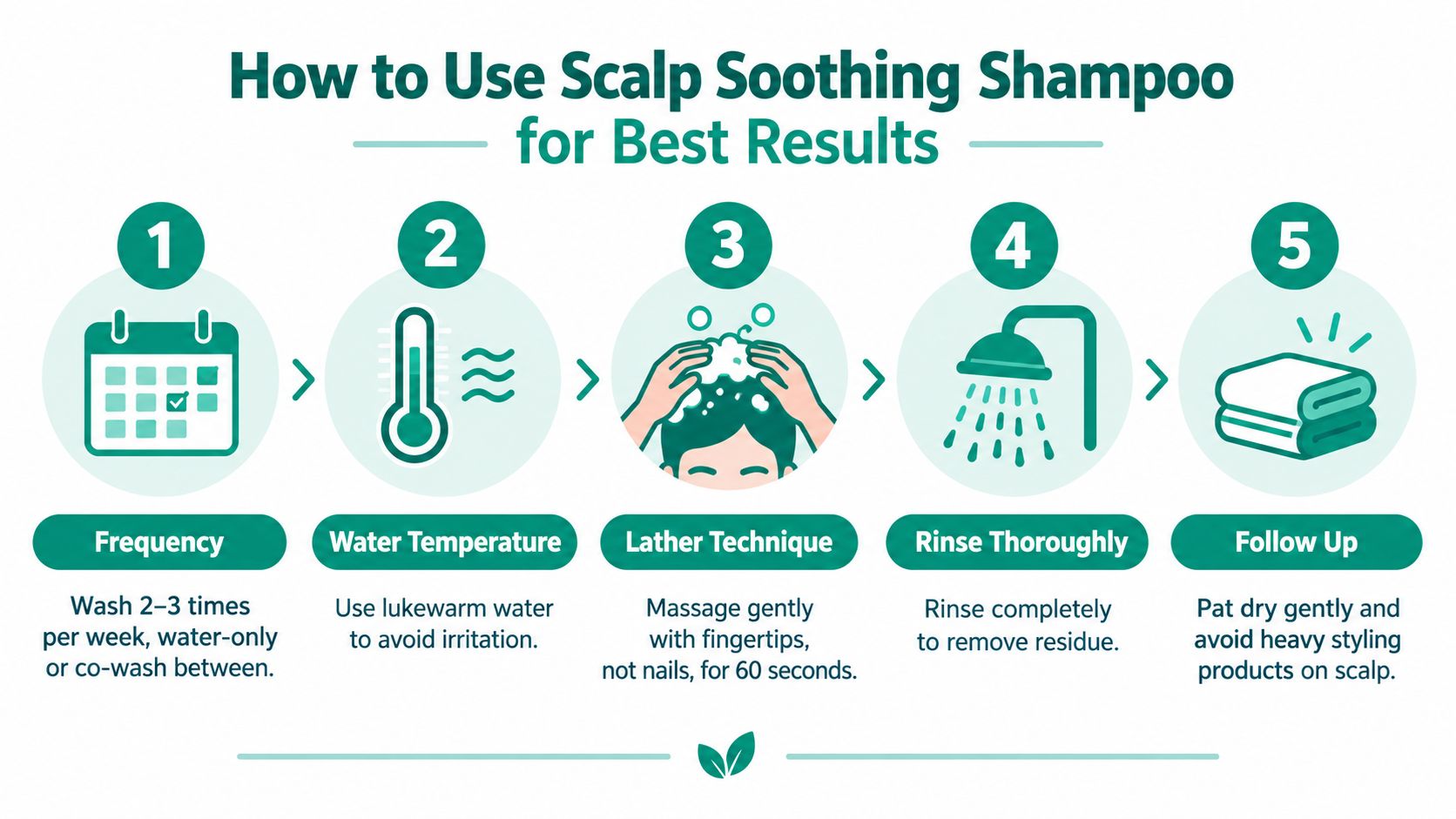
Rinse thoroughly, especially around the hairline and behind the ears. Apply a fragrance-free conditioner from the mid-lengths to the ends, rather than coating the scalp, unless the product is specifically designed as a scalp conditioner. Pat dry instead of rubbing aggressively, and avoid heavy styling products directly on irritated skin.
Track the response instead of guessing
Once a week, rate scalp comfort on a 1 to 10 scale and note itch, visible flakes, oiliness, and tightness. Continue tracking for 6 to 8 weeks before judging a maintenance formula, unless it causes burning, swelling, or a clear worsening reaction. A simple record can reveal whether a product helps consistently or only feels soothing for a few hours.
Putting It All Together for a Calmer Scalp
At the shelf, use three filters. First, choose sulfate-free or balanced surfactants if your scalp is reactive or easily tight. Second, look for a recognizable support ingredient, such as humic or fulvic acids, aloe, tea tree oil, salicylic acid, or urea. Third, favor formulas with limited added fragrance and dyes when irritation is a concern.
In the shower, keep the process just as deliberate:
- Patch test first: Try a small area before applying a new active across the scalp.
- Use measured contact time: Let the lather sit briefly as directed, without extending use beyond the label.
- Keep conditioner on the lengths: Avoid unnecessary residue on the scalp.
- Track for 6 to 8 weeks: Look for a steady pattern, not one unusually comfortable wash.
- Escalate appropriately: Persistent itching, bleeding, painful plaques, or hair loss calls for a dermatologist's assessment.
Clinical evidence supports the broader formulation logic. In the salicylic-acid, urea, and glycerin study, scalp severity improved alongside irritation and quality-of-life measures, while other clinical work supports combining scale management with conditioning comfort. A soothing shampoo can manage symptoms and support the barrier, but it can't diagnose the cause of every itchy scalp.
Choose your next shampoo by matching the dominant signal to the formula's actual ingredients. If symptoms persist, stop switching bottles and book a dermatology appointment so your routine can address the condition rather than only its surface signs.
Start today by checking your current shampoo label, identifying its cleansing agents and soothing actives, then write down your scalp's main signal, itch, tightness, oiliness, or attached scale. Use that observation to build a gentler routine, and seek professional evaluation if the problem remains persistent or becomes painful.